

“Do you have a tech pack?”
It is one of the first questions a manufacturer asks. For a lot of new brand founders, it is the moment the whole process suddenly feels out of reach. It should not be. A tech pack is simply a document that tells a factory exactly what to make. No special software. No technical background required.
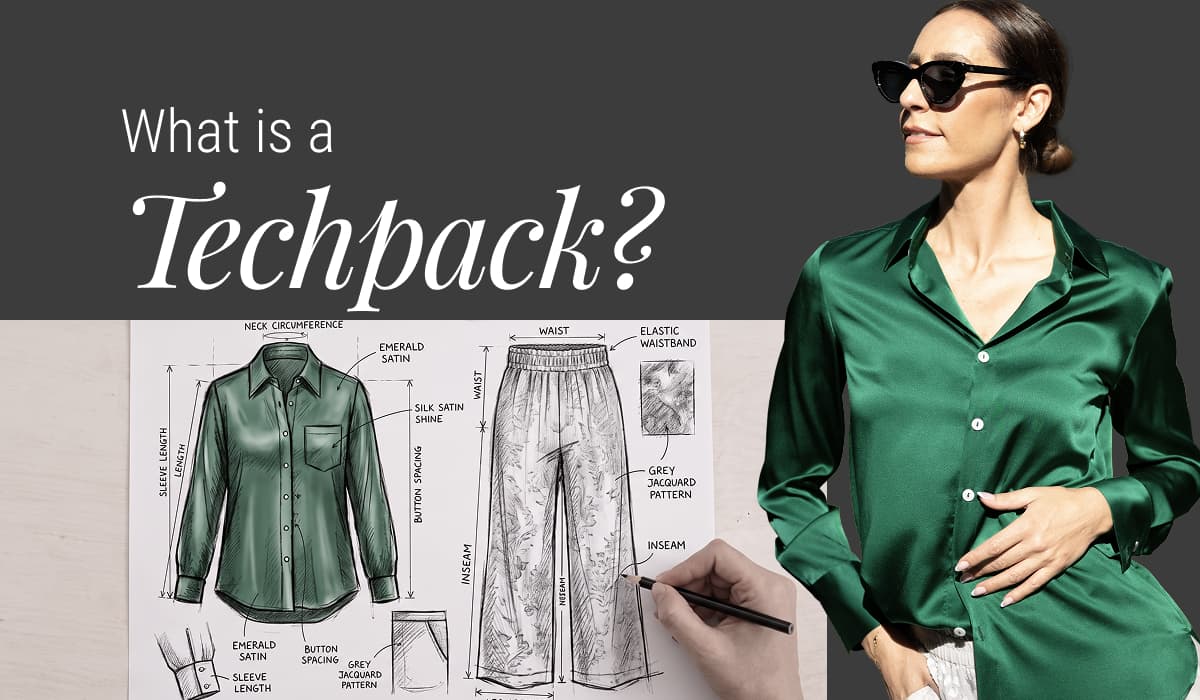
A tech pack, short for technical package, is simply the instruction document that tells a factory exactly what to make. It combines a sketch or flat drawing with measurements, materials, colours, and construction notes, so the factory is not guessing what you mean. It is not a design skill, and you do not need special software to start one.
Without one, communication happens through back-and-forth emails and photos, and small details get lost. A factory might interpret “navy” differently than you pictured it, or place a seam where you did not expect.
A tech pack removes that guesswork, and it protects your production timeline, since fewer misunderstandings mean fewer sample rounds and fewer costly revisions. This post walks through what usually goes into one, how detailed yours needs to be depending on where you are in the process, and what to do (and avoid) along the way.
What Usually Goes into a Tech Pack
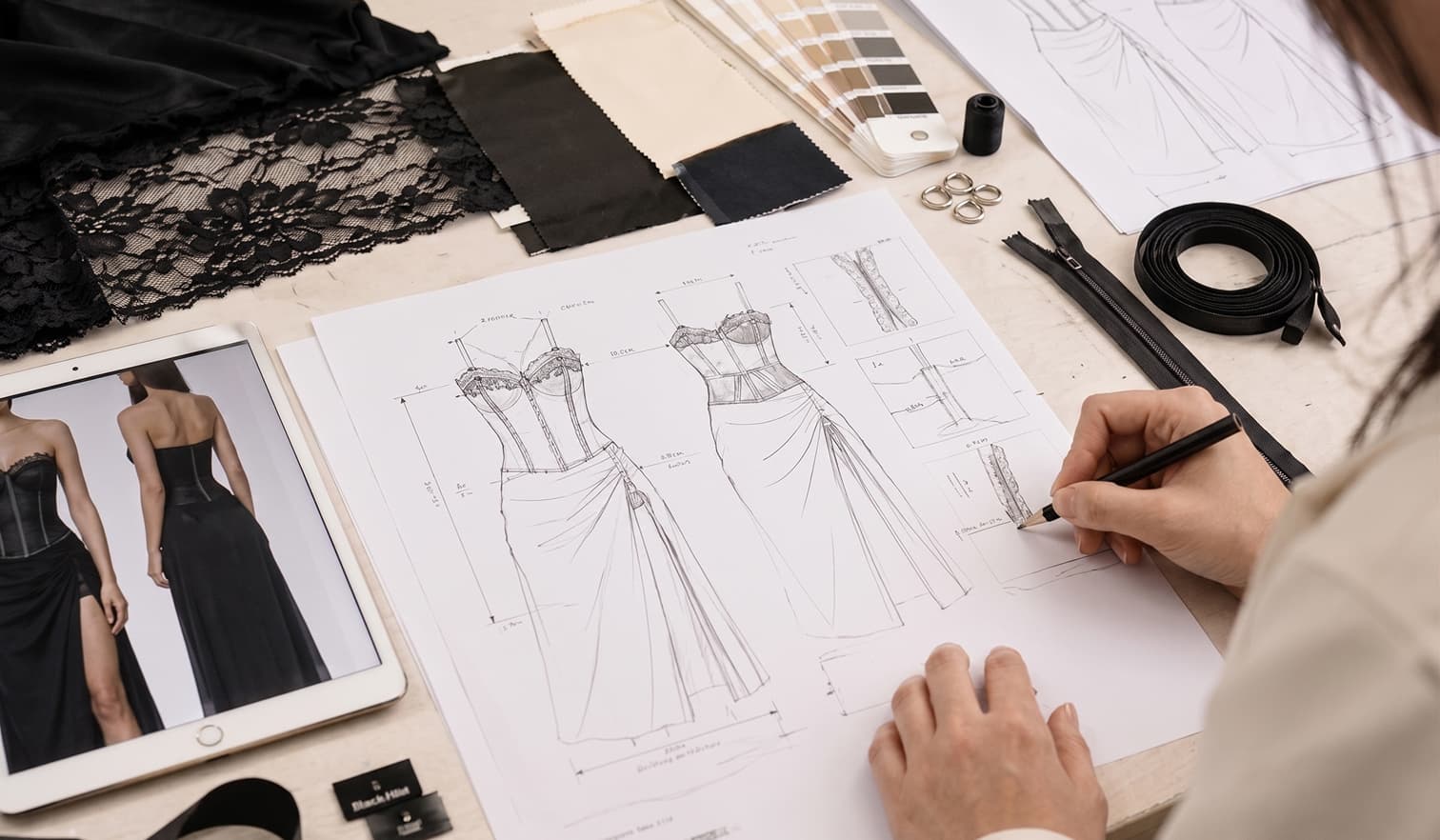
A full tech pack is built piece by piece. Most include:
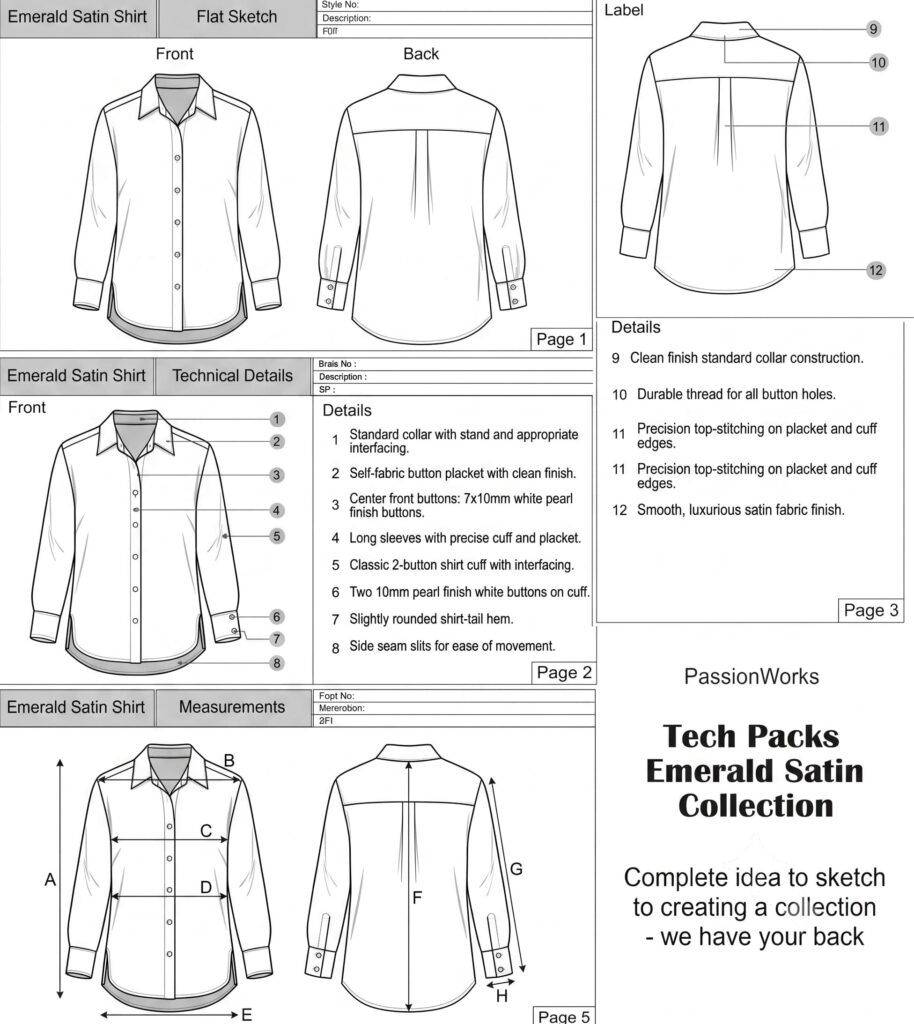
- Technical flat sketch — a front and back line drawing showing construction details clearly
- Measurement spec sheet — exact measurements for each size, with points of measure marked
- Fabric and material specs — fibre content, weight in GSM, and any finish required
- Colour codes — Pantone or Pantone TCX references, so colour is never left to interpretation
- Trims and hardware — buttons, zippers, drawcords, with supplier reference where possible
- Construction and stitch details — seam types, stitch density, topstitching notes
- Label and packaging placement — where care labels, brand labels, and hang tags sit
- Grading rules — how measurements scale across your full size range
- QC standards — acceptable tolerances and inspection points before shipping
How Detailed Does It Need To Be To Talk To a Factory
You do not need every section above to start a conversation with a factory. Tech packs tend to exist on a spectrum, and it helps to think of them in two stages.
The Simple Version (Starter)
This is enough to open a conversation and get an initial quote.
It usually includes a reference sketch or photo, rough measurements for one sample size, a general idea of the fabric, and a colour reference. It is not production ready, but it gives a factory enough to understand your direction and estimate cost and feasibility.
The Detailed Version (Production Ready)
This is what a factory needs before bulk production.
It includes a full spec sheet with tolerances, grading across every size in your range, exact trim and label placement, stitch type for every seam, and clear QC standards. This version is usually built up gradually, refined after each sampling round rather than written perfectly on day one.
For that very first conversation, the simple version is genuinely enough. A sketch, a rough measurement, and a sense of the fabric and colour will let a factory tell you whether the idea is feasible and give you a ballpark cost.
Before you move into sampling, though, you will want at least the core measurements, fabric spec, and colour reference locked in, since these are what the first sample is built from. The remaining detail, things like grading, exact trim codes, and QC tolerances, can be filled in as the sample rounds progress.
A tech pack is a living document. It should get more precise with every round, not arrive finished on the first try.
Tech Pack Do’s and Don’t
DO
- Use numbers, not adjectives. “Chest 52cm” is useful. “A bit roomy” is not.
- Include reference photos alongside your sketch, especially for construction details that are hard to describe in words.
- State tolerances where they matter, such as plus or minus 1cm on key measurements.
- Keep terminology consistent throughout the document. If you call it a “placket” on page one, do not switch to “front opening” on page three.
- Update the tech pack after every sample round, so it always reflects the current, approved version.
DON’T
- Don’t rely on vague descriptors like “make it look premium” without backing it up with a reference or a spec.
- Don’t leave measurements out because you assume the factory will figure it out. They will make a decision for you, and it may not match what you had in mind.
- Don’t give feedback verbally only. If a change is not written into the tech pack, it is easy for it to get lost between sample rounds.
- Don’t treat the first version as final. Locking it too early usually means more revisions later, not fewer.
When Is a Tech Pack Made, and How
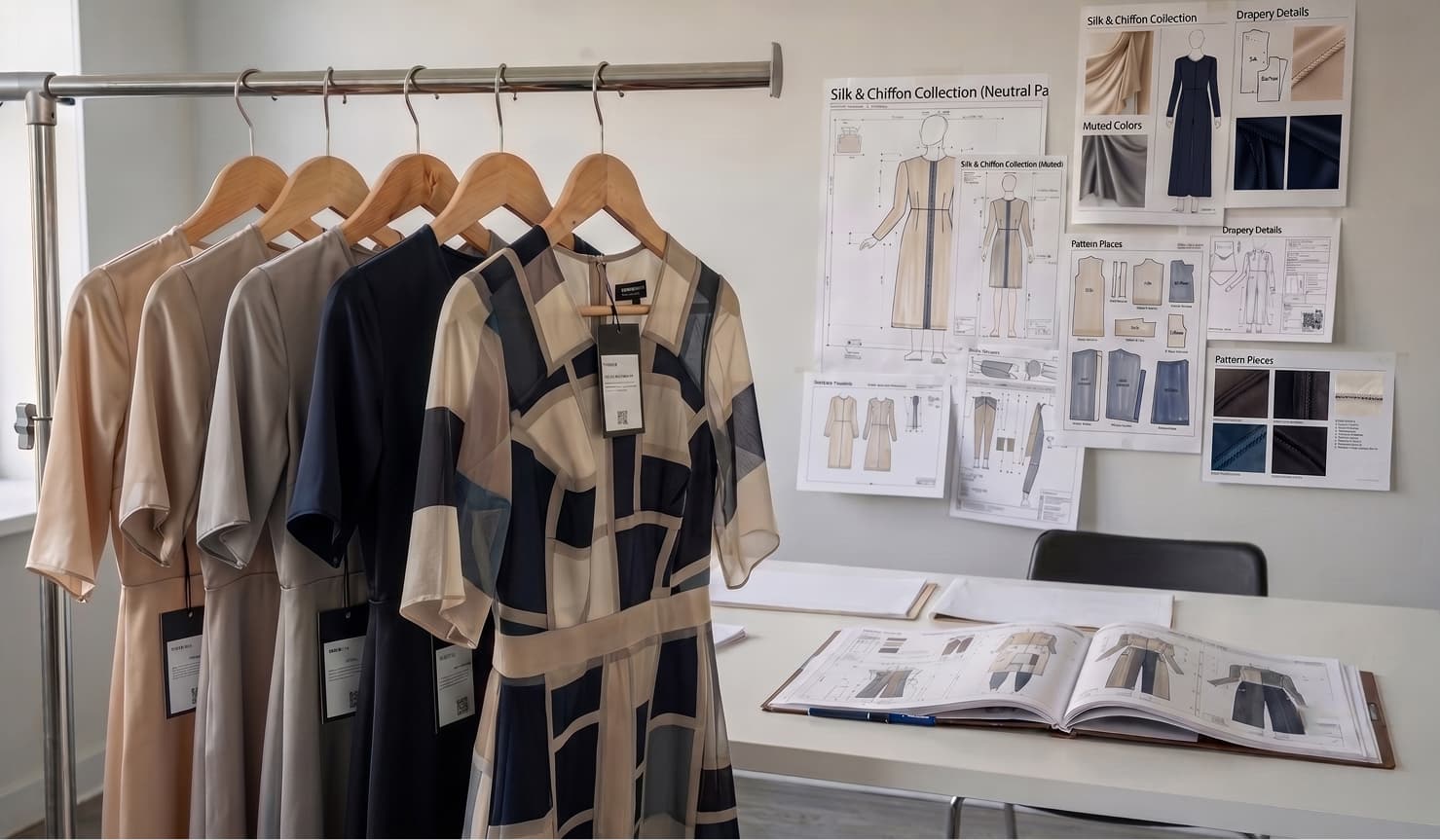
A tech pack starts to take shape before sampling begins, even in its rough, simple form, and it gets refined throughout the sampling process as fit and construction details are confirmed. By the time you reach bulk production, it should be fully locked.
You do not need expensive software to build one. Many founders start in Canva, Google Sheets, or Excel, laying out a sketch alongside a simple measurement table. As a brand grows, some move to dedicated tools such as Adobe Illustrator or tech pack platforms built specifically for the job, which make grading and version control easier. The tool matters far less than the clarity and consistency of the information inside it.
You Don’t Need a Perfect Tech Pack To Start With Us
A well-built tech pack is genuinely useful, and it will make your production run smoother. But it is not a requirement to reach out to us. We have in-house designers at our Brisbane office, and part of how we work is building the tech pack together with you, starting from a sketch, a reference photo, or even just a clear description of what you have in mind.
If you have a detailed tech pack already, we will work from it directly. If you do not, that is completely fine. Bring us what you have, and we will help turn it into something a factory can build from.
