
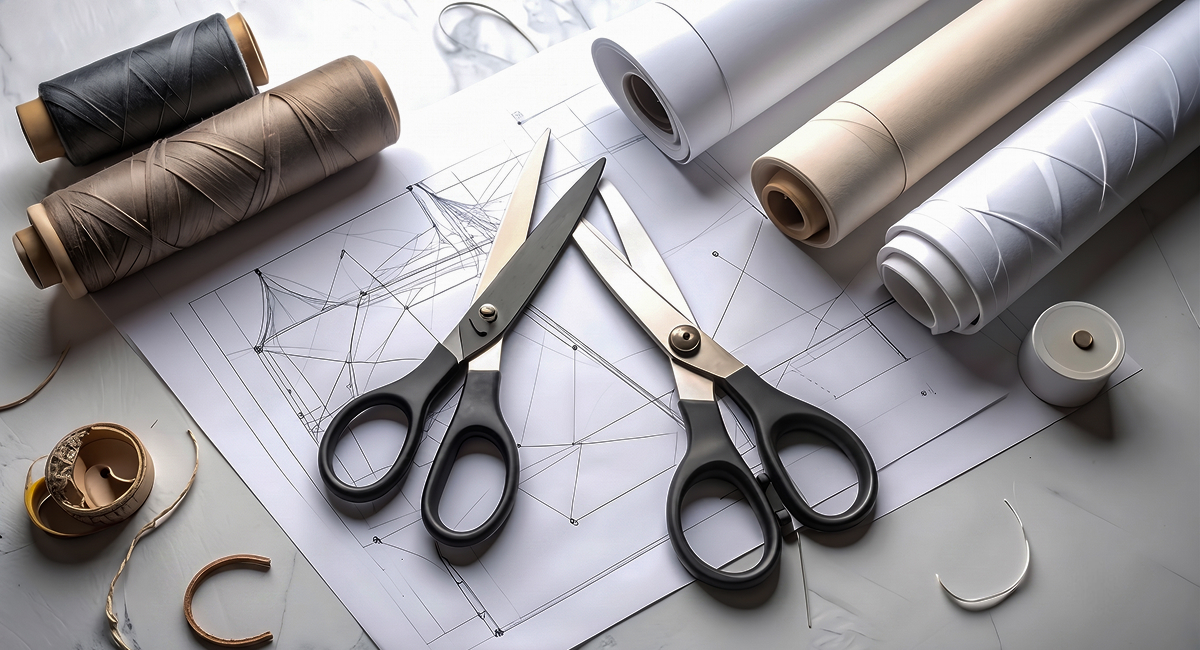
Before a single piece of fabric gets cut, a garment already exists as a flat, precise shape on paper or on screen. That shape is the paper pattern, and it is arguably the single most consequential document in the entire production process.
Get it right, and everything after it, cutting, sewing, grading, fitting, runs smoothly.
Get it wrong, and the mistake follows the garment all the way to your customer’s hands.
A tech pack tells the factory what you want. A paper pattern is what actually makes it possible to cut and sew that garment consistently, size after size, batch after batch. This post looks at why paper patterns exist, where they sit in the production process, who makes them, how they are made, and what happens when one is wrong.
Why a Paper Pattern Is Needed, and Where It Fits In
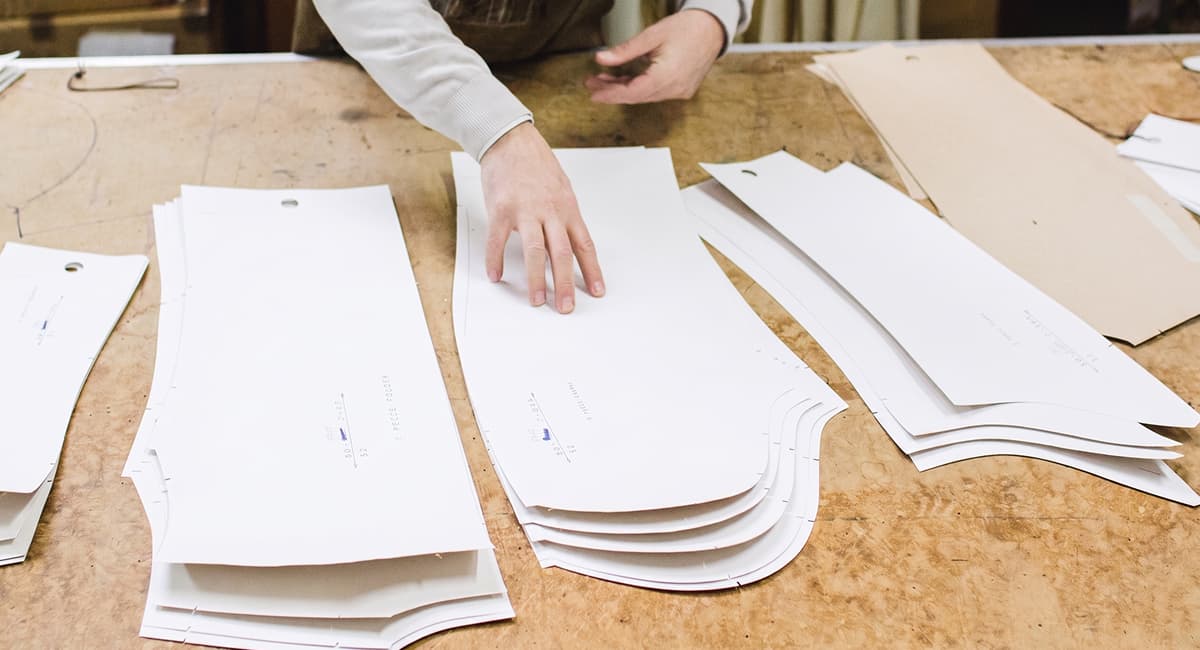
A paper pattern is the set of flat, two-dimensional templates, one for each panel of a garment, front, back, sleeve, collar, cuff, that get placed on fabric and cut. Without it, a factory has no consistent way to cut the same garment twice. A skilled tailor can eyeball one piece, but production is about repeating that same shape hundreds or thousands of times, across multiple sizes, with the same result every time. A pattern is what makes that repeatable.
It sits right between design and cutting. Once a design and a tech pack are approved, the pattern is drafted first, then used to cut the very first prototype or fit sample. From there, it is corrected through fitting rounds, then graded across the full-size range, and finally used to build the cutting marker for bulk production. Every stage after the pattern, sewing, quality control, grading, sizing, depends on it being accurate.
Who Makes A Paper Pattern, and Why It Takes Real Skill
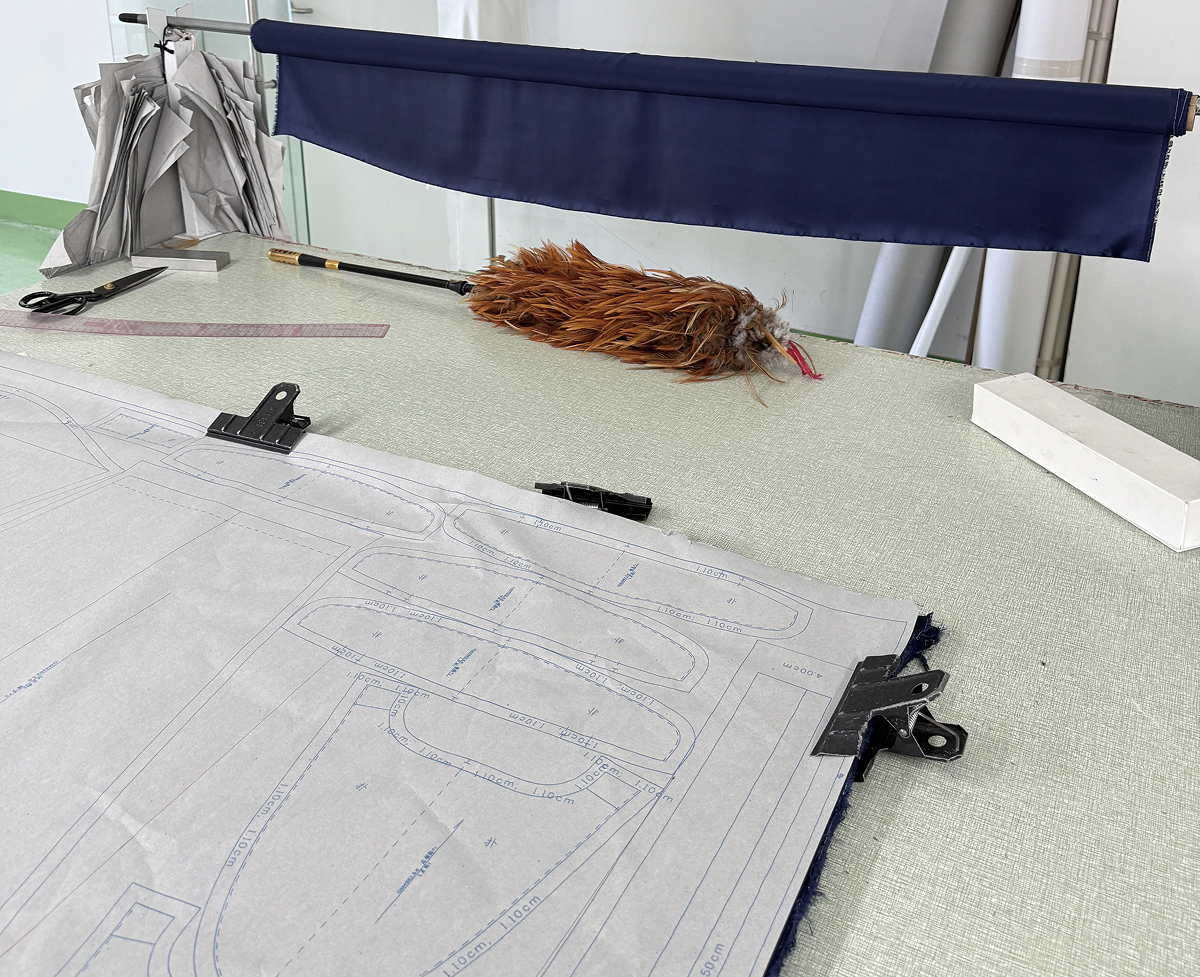
This work belongs to a patternmaker, a role distinct from a fashion designer. A designer decides what a garment should look like. A patternmaker works out how to actually construct it in fabric, translating a sketch or a draped idea into precise, cuttable shapes, and it is not something most people can pick up quickly.
It sits at the intersection of geometry, construction knowledge, and a working understanding of how fabric behaves and how a body moves. A patternmaker must know how much room a garment needs to move and sit correctly on a real body, not just read a measurement chart.
They have to know how seams, darts, and panels come together in three dimensions before a single stitch is sewn, and how a small error in one seam allowance compounds across every panel of the garment. Fabric adds another layer of difficulty, since a pattern that works for a stiff cotton will not automatically work for a fluid silk or a stretch knit, so the pattern often needs adjusting for how that specific fabric drapes, stretches, or shrinks.
Most production patternmaking today also runs through specialised CAD software, which is used for grading and marker making as well. It typically takes years of formal training and hands-on experience before someone can draft a production-ready pattern independently. In a factory setting, patternmakers work closely with the sample room, correcting the pattern after every fit round until it is approved. This is precise, technical work, and it is exactly why getting it right, or wrong, has consequences for everything that follows.
How a Paper Pattern Is Made
There are two core methods, and most patternmakers use a mix of both depending on the garment.
- Draping — fabric, usually muslin, is pinned and shaped directly onto a dress form to work out the silhouette in three dimensions. This is common for garments with complex drape, asymmetry, or fluid movement, where flat measurements alone cannot capture the shape.
- Flat pattern drafting — the pattern is built with rulers, curves, and a base block, a standard, pre-fitted foundation pattern, using specific body measurements and geometry. This is the more common method for structured garments like shirts, trousers, and jackets.
Once a first pattern is drafted, either by hand on paper or directly in CAD software such as Gerber, Lectra, or Optitex, it is cut and sewn into a sample. Fit issues get marked directly onto the sample or the pattern, and the pattern is corrected. This cycle repeats across several fit rounds until the pattern is approved. From there, it is digitized if it was not already, and graded, meaning scaled up and down to produce every size in the range, before it becomes the basis for the cutting marker used in bulk production.
What Happens When a Paper Pattern is Wrong
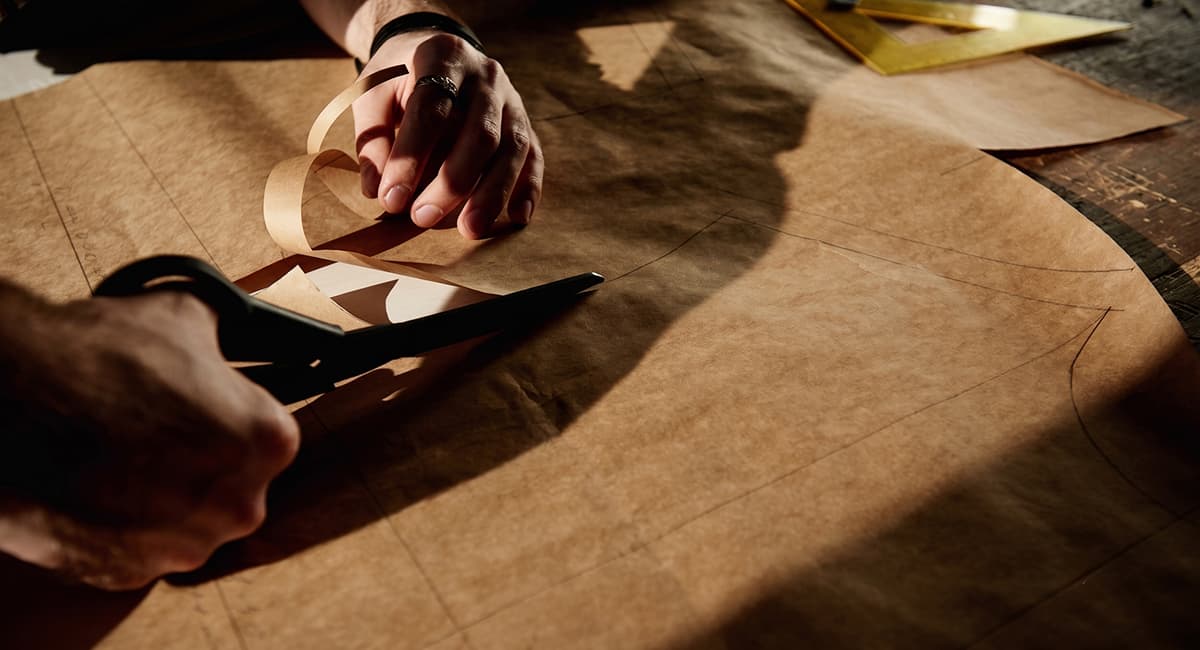
A pattern error rarely stays contained to one problem. Because every later stage is built on top of the pattern, a mistake tends to compound as it moves through production.
Immediate Problems
- Fit issues — a garment that pulls, gapes, or sits incorrectly on the body, often only visible once the fabric is on a form or a person, not on paper.
- Seam mismatches — panels that do not line up correctly at the seam, causing puckering or uneven construction.
- Fabric waste — an inefficient or incorrect pattern shape wastes fabric during cutting, which raises cost per unit.
Downstream Problems
- Grading errors multiply the mistake — if the base pattern is wrong, every size graded from it inherits the same error, so a small issue in a sample size can turn into a fit problem across an entire size run.
- Repeated sample rounds — a pattern error discovered late means going back to correct the pattern and re-cutting a new sample, adding weeks to a timeline that was already tight.
- Marker and cost blowouts — an inefficient pattern shape used at the marker-making stage wastes fabric across the entire bulk order, not just one sample, which can meaningfully affect margin at scale.
- Inconsistent bulk production — if a pattern issue is missed until after cutting has started, an entire batch can come out with the same fit problem, which is far more costly to fix than catching it at the sample stage.
- Buyer and customer complaints — fit problems that reach the final garment translate directly into returns, wholesale rejections, or damage to how a brand is perceived for consistency and quality.
This is why pattern accuracy is treated as one of the highest-leverage points in the entire production process. A small correction at the pattern stage is inexpensive. The same correction discovered after bulk cutting is not.
Why This Matters At PassionWorks
A paper pattern is only as reliable as the person making it, which is why we do not treat patternmaking as a single, generalist task. Our China factory has dedicated staff at each step, patternmaking, grading, sample fitting, marker making, and many of them have worked with PassionWorks for well over a decade. That kind of continuity matters. A patternmaker who has seen thousands of fit rounds catches issues earlier, and a team that has worked together for years communicates fit corrections faster and more accurately between each other.
For our clients, this means fewer surprises further down the line. The pattern work happens with people who have done it long enough to know where things typically go wrong, before they ever reach your bulk order.
