
We often hear from founders who have found the perfect garment. On Instagram, on a brand’s website, or generated by AI. The message is almost always the same: “Can you make something like this?”
It’s a completely natural starting point. But the answer, and more importantly, the cost and the timeline, depends entirely on one question most people haven’t thought about yet: which production model are you actually asking for?
OEM, Original Equipment Manufacturing
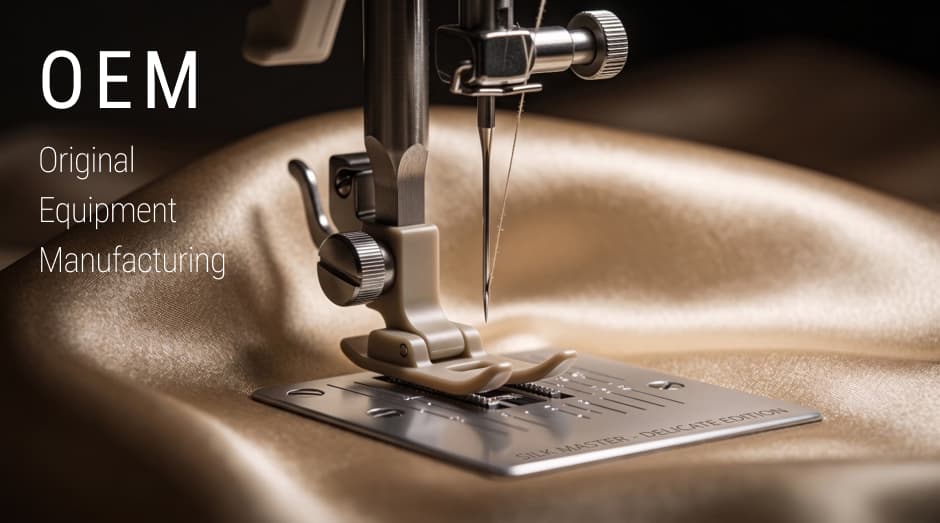
Your Design, Built From Scratch.
OEM is the path for founders who want to create something that is genuinely and entirely their own. You bring the design, the measurements, the construction details, the fabric specification, and the factory produces exactly what you’ve specified. The intellectual property belongs to you from day one. So does the development investment.
PROS:
- Your design and IP are fully yours. No other brand can sell the same product.
- Brand identity can be built exactly as envisioned, from the first stitch.
- Strongest long-term positioning, especially for premium or luxury brands.
- Full control over every construction and material decision.
CONS
- Highest development cost. Pattern making, sampling, and revisions all fall on you.
- Longest lead time. More time passes before your first product reaches a customer.
- Requires clear specs or a tech pack to get started properly.
- Higher MOQ in most cases. Larger upfront commitment before demand is proven.
- Development costs are non-refundable if the product doesn’t proceed to production.
OEM at PassionWorks: Your Design, Built With Us.
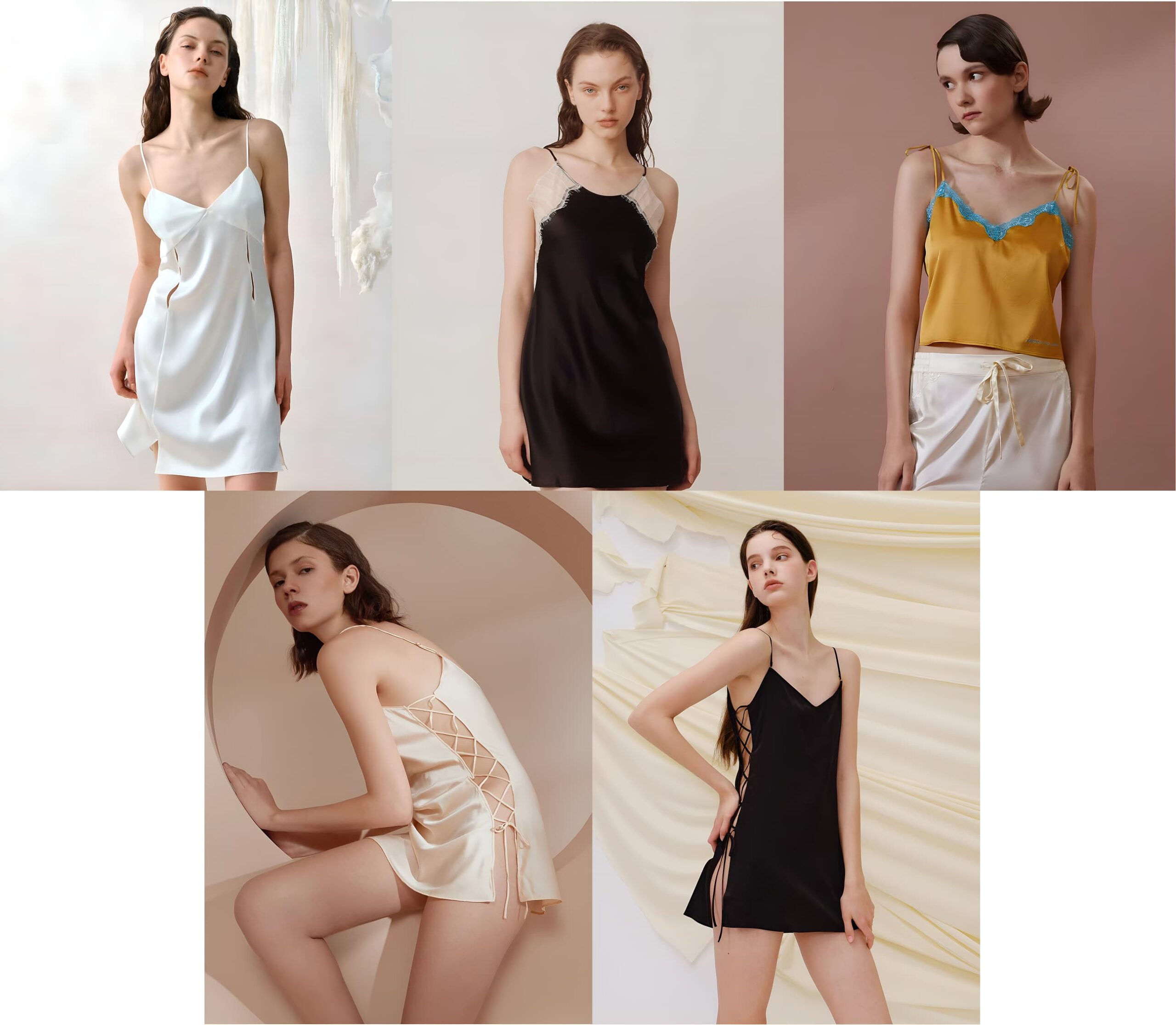
Because we have our own manufacturing facility in China and work with experienced designers based in Australia, developing your original design from the ground up is a natural part of what we do. You bring the idea, a sketch, a reference image, a concept, and we take it through pattern development, sampling, and into production. Your design, your IP. Built properly from day one.
We work with a range of silk and silk-blend fabrics including 100% mulberry silk, silk satin, silk charmeuse, and crinkle silk satin. Every element is adjustable, from silhouette and construction detail to colour, trim, and finish. Your branding, labels, tags, and packaging are applied throughout.
Fabric samples and product samples are available before bulk production. MOQ and lead times are confirmed at the start of the conversation, not after you’ve already invested in development. If you’re looking for a long-term supply relationship, that’s exactly the kind of partnership we’re built for.
OEM, Original Equipment Manufacturing
A proven base, adapted to your vision.
ODM means working from an existing base design rather than starting from scratch. The factory already has a pattern, a slip dress, a pyjama set, a robe, and you adapt it: changing the fabric, adjusting proportions, adding or removing details. It’s faster to market, less expensive to develop, and still allows for meaningful differentiation.
In practice, however, genuine ODM is rarer than most founders expect. Many factories that use the term are simply offering a generic catalogue with limited modification options, or showing you a reference they can loosely replicate. A factory that releases its own original, season-by-season collection with real patterns and real construction behind each style is the exception, not the rule.
PROS
- Lower development cost and shorter lead time than full OEM.
- No tech pack required. Inspiration images and fabric direction are enough to start.
- Fewer sampling rounds, because the factory starts from a proven base pattern.
- Faster path to market. Design validation happens through sales, not just sampling.
CONS
- Other brands may be using the same base design. Differentiation has limits.
- Design modifications may be constrained by the factory’s existing patterns.
- IP ownership is limited. The base design belongs to the factory.
- As the brand grows, ODM boundaries become more visible. Migration to OEM likely.
- Quality of the base design varies significantly between manufacturers.
ODM at PassionWorks: Our Collection, Adapted to Your Vision
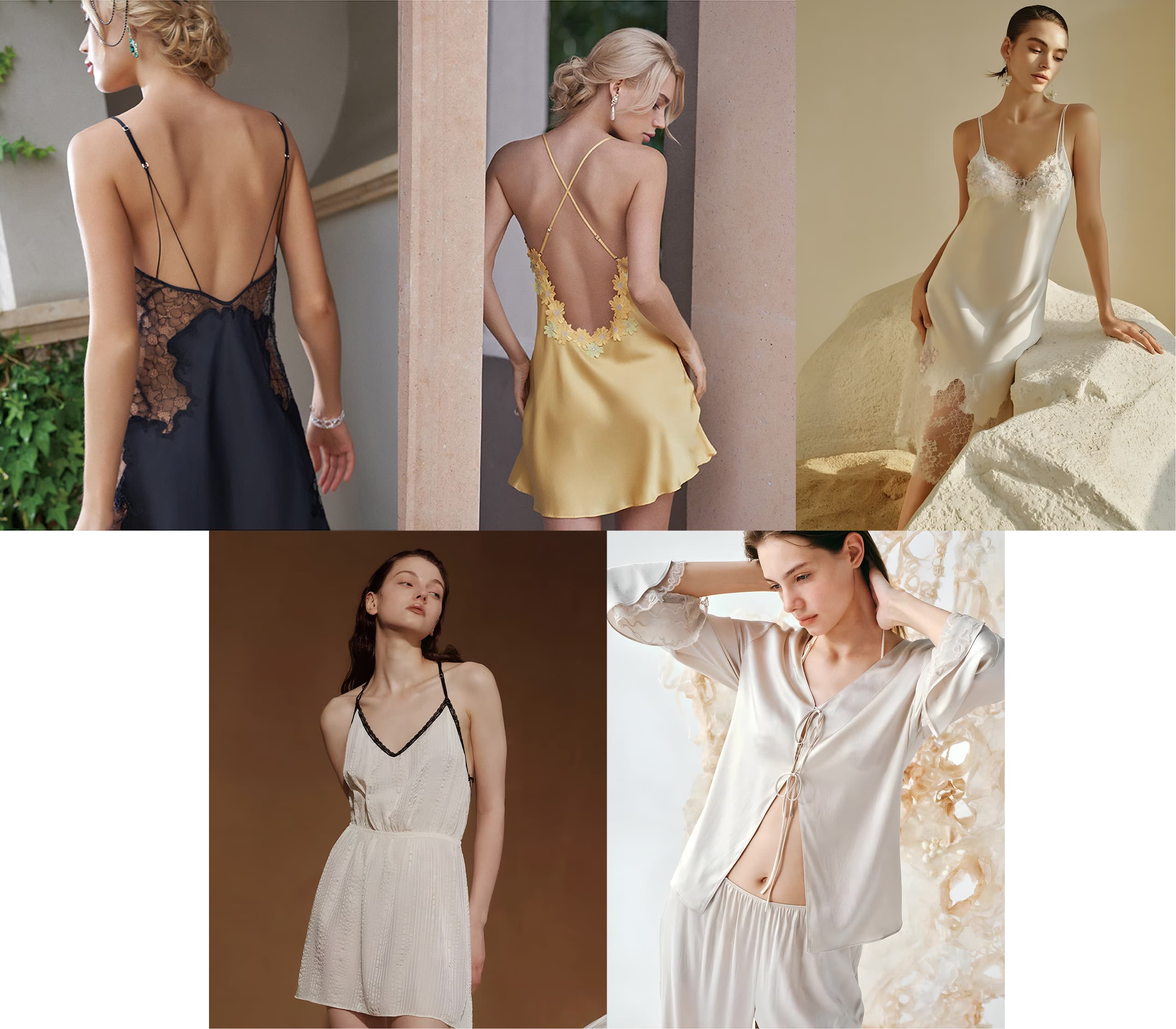
Many factories don’t have their own designs to offer. ODM, in the truest sense, requires the factory to have a proven pattern worth adapting, and that’s far less common than the term suggests.
Most manufacturers who call themselves ODM are simply showing you someone else’s reference, or a generic catalogue with limited modification options.
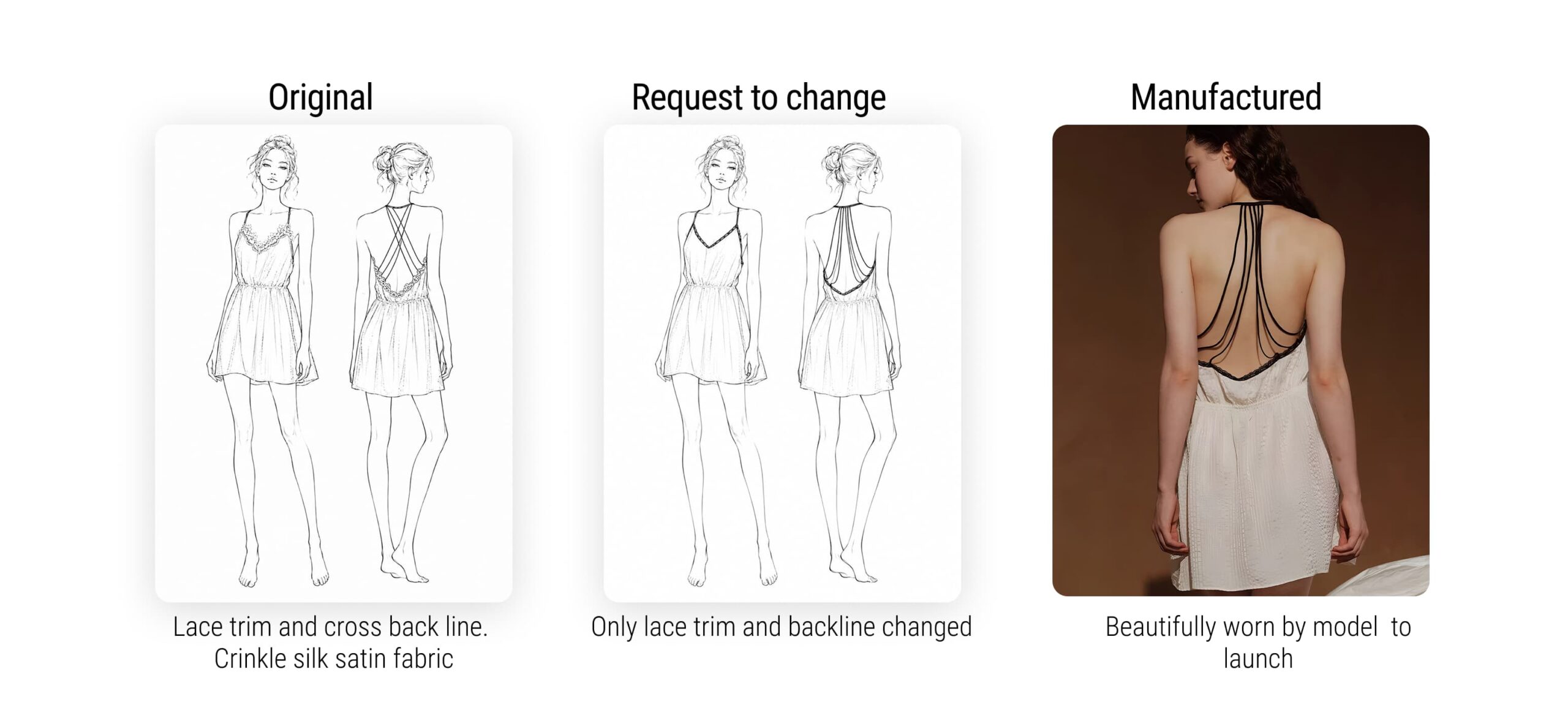
We are different. Our design team releases a new collection every season. These are original styles, developed in-house, with real patterns, real construction logic, and real fabric direction behind them.
If you see a silhouette, a fabric, or a detail from our range that fits your brand vision, we can adapt it, adjusting proportions, colours, trims, and finishing details to make it yours. It’s a faster, more cost-efficient path than starting from scratch, and it still allows for genuine differentiation.
Private Label
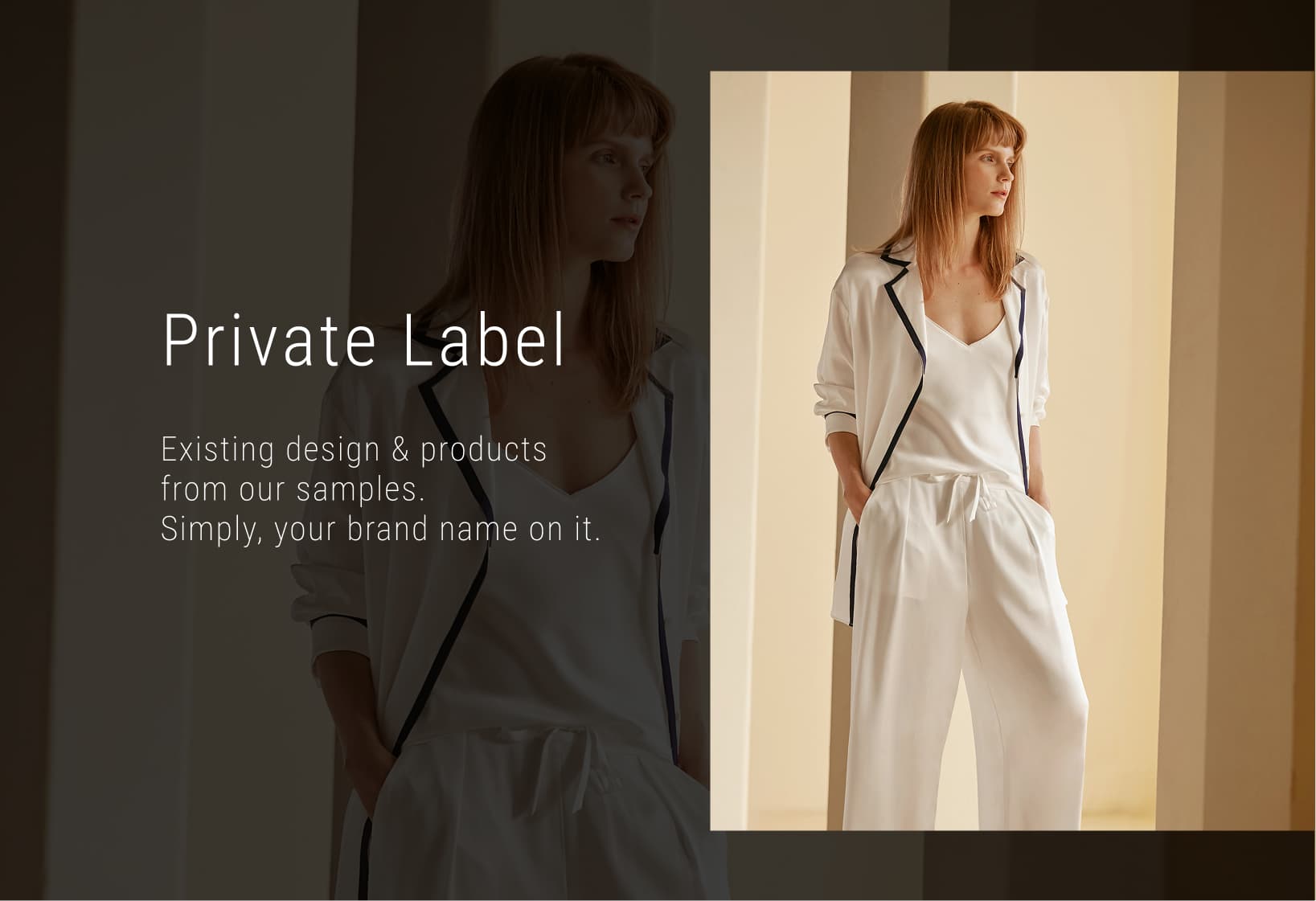
Existing product. Your brand name on it.
Private label is the fastest path to market. An existing, ready-made design goes out under your brand with no development process and minimal lead time. It works well as a market testing tool, a way to validate demand and build a customer base before committing to a full development process.
The key distinction from ODM: there is no customisation. You take the product as it is. The trade-off for speed and low cost is that the same product, or something very close to it, may exist under other brand names already.
PROS
- Almost zero development cost. The fastest and most affordable way to get started.
- Shortest lead time. In some cases, ready stock is available immediately.
- Lowest MOQ. Smallest financial commitment at the earliest stage.
- Ideal for testing the market before investing in product development.
CONS
- No product differentiation. Identical or near-identical products may exist elsewhere.
- No design input. You take what the factory offers, with no modification.
- Premium brand positioning is difficult to sustain at this level.
- Long-term brand equity is limited. Growth depends on marketing, not product.
Private Label at PassionWorks: Our Collection, Directly Under Your Brand.
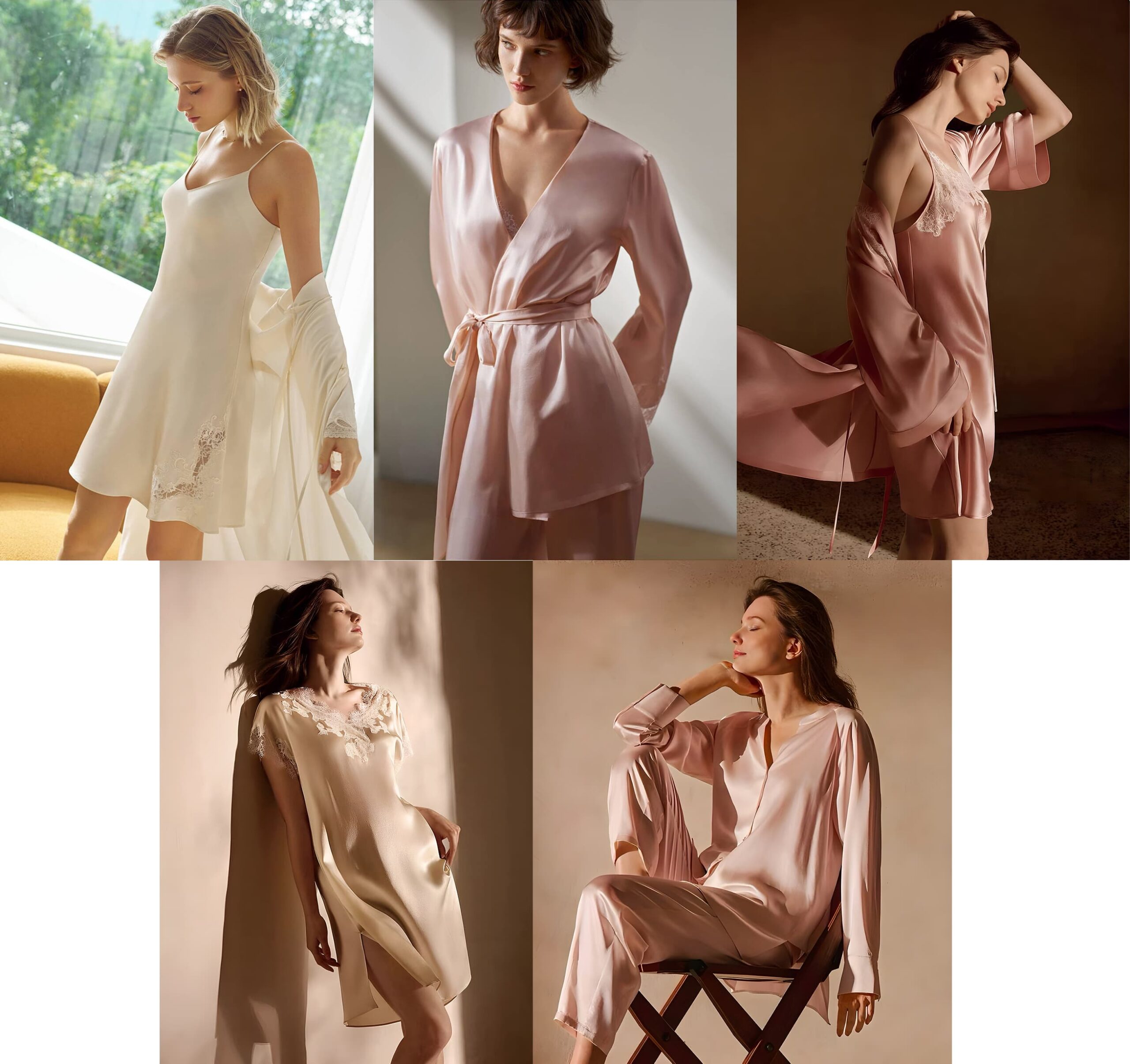
If a style from our seasonal range suits your brand exactly as it is, no changes, no modifications, you can carry it under your own label. No development process, no sampling rounds. It’s the fastest and most affordable way to get product in front of customers while you build toward your own collection.
The distinction between ODM and Private Label with us comes down to one thing: whether you want to customise. Same starting point. The level of modification determines which model applies.
Before You Choose: Three Questions Worth Answering First
Whichever model makes sense for your situation, there are three things that shape every conversation we have with a new founder. They’re not complicated questions. But most people who reach out haven’t thought them through yet, and without them, it’s almost impossible to give you a useful answer.
1. What is your target retail price?
This single number guides almost every material decision. A garment positioned at $80 retail calls for completely different fabric choices than one positioned at $280. Before asking about fabrics or production, know what you’re trying to sell it for, and work backwards from there.
2. What fabric are you thinking about?
Fabric choice affects MOQ, unit cost, lead time, and what the final garment actually looks and feels like. Silk and silk-blend garments have very different production economics to cotton, bamboo, or polyester satin. Knowing your fabric direction, even roughly, is what turns a conversation from general to specific.
3. How many styles, colours, and sizes are you planning?
This is where many first-time founders get surprised. Sizes and colours multiply quantities fast. A run from XS to XL across two colourways in a single style is already ten size groups. Knowing your scope early, even an estimate, means you can plan realistically rather than adjust painfully later.
You don’t need to have everything locked down before you reach out. A rough idea of your retail price, your preferred fabric, and your intended scope is enough to start a genuinely useful conversation
