
You’ve finally got a factory quote. The price looks good. But somewhere in the email you see: “Price quoted FOB Shanghai.” FOB. You’ve seen it before. You nodded like you knew what it meant.
Most founders do. Until the invoice arrives and they realise they were responsible for a leg of the journey they didn’t know existed.
First, What Are These Terms, and Why Do They Matter?
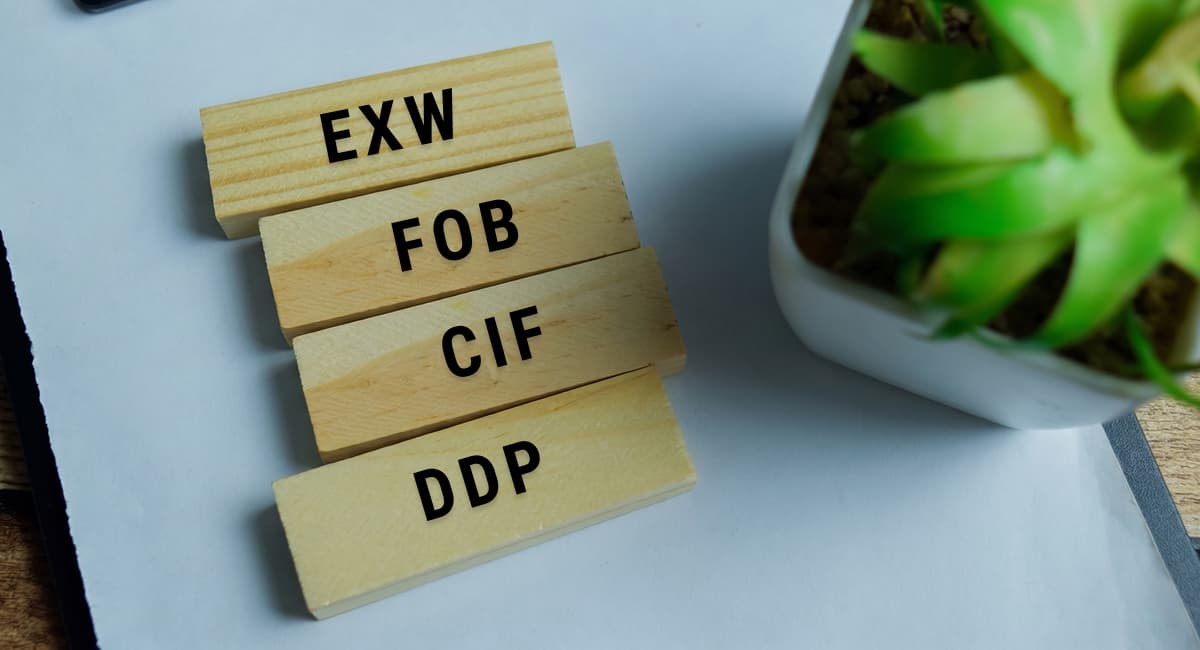
EXW, FOB, CIF, and DDP are part of a set of internationally recognised trade rules called Incoterms (International Commercial Terms), published by the International Chamber of Commerce. They define one specific thing: who is responsible for what, and from which point.
The moment you agree to a price under one of these terms, you’re agreeing to a division of responsibility — costs, logistics, insurance, and risk. The factory isn’t hiding anything. But if you don’t know what the terms mean, you may not know what you’ve agreed to take on. Example: 400 silk skirts (2 colours, 4 sizes) from Shanghai to Brisbane.
Here’s the full picture at a glance :
| China → Australia | EXW | FOB | CIF | DDP |
|---|---|---|---|---|
| Factory → origin port | Buyer | Seller | Seller | Seller |
| Export customs | Buyer | Seller | Seller | Seller |
| International freight | Buyer | Buyer | Seller | Seller |
| Marine insurance | Buyer | Buyer | Buyer | Seller |
| Import customs | Buyer | Buyer | Buyer | Seller |
| Duties & GST | Buyer | Buyer | Buyer | Seller |
| Last-mile delivery | Buyer | Buyer | Buyer | Seller |
| Risk transfers at… | Factory door | On board vessel | Destination port | Your Door |
EXW : Ex Works
In plain language : The factory’s job ends the moment your goods are ready at their door.
Under EXW, the buyer are responsible for everything from that point forward. That means arranging a truck from the factory floor, domestic freight to the export port, export customs clearance in China, international shipping, Australian customs, duties, GST, and final delivery to your warehouse.
EXW gives you maximum control, and maximum responsibility. For a first-time importer with no freight infrastructure, it’s the most exposed position you can be in.
- Who it suits : Large brands with their own freight forwarding relationships who want full control over every step.
- For a first order : Not recommended.
Under EXW, you are managing seven separate steps from the moment goods leave the factory. That means coordinating four independent vendors: a domestic trucker in China, a freight forwarder, an Australian customs broker, and a last-mile delivery provider. The additional cost on top of your factory price typically runs between AUD $1,150 and $1,700, before any unexpected delays or handling fees.
FOB: Free On Board
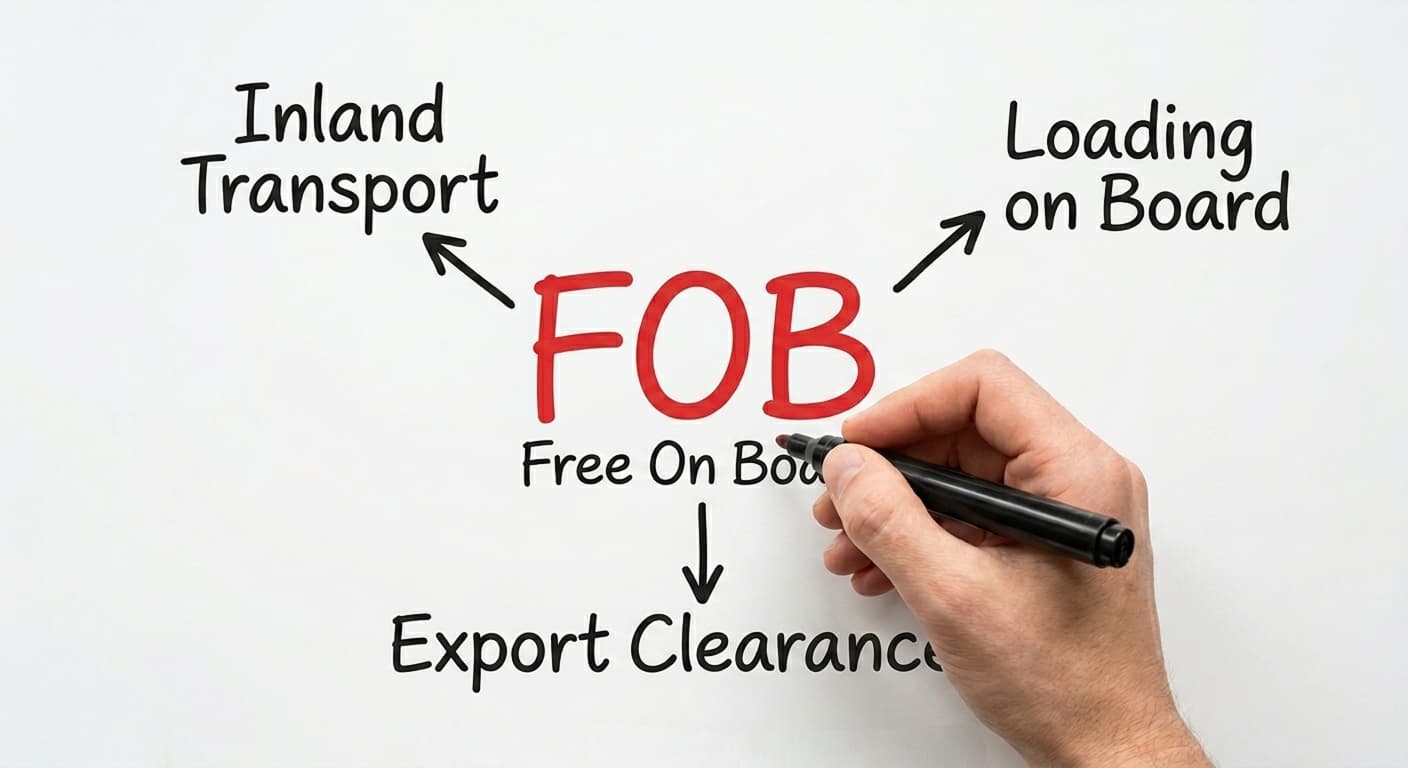
In plain language: The factory gets the goods to the port and onto the ship. After that, it’s your responsibility.
FOB is the most common trade term in garment manufacturing. The factory handles domestic freight, export documentation, and port handling in China. Once the goods are on board the vessel, risk and cost transfer to you.
From FOB onwards, you’re responsible for :
- International sea or air freight
- Marine insurance (optional but recommended)
- Import customs clearance in Australia
- Duties and GST
- Last-mile delivery to your warehouse or fulfilment centre
When a factory says “USD 28.00 FOB Shanghai,” that USD 28.00 gets each unit onto a ship in Shanghai. What happens after that is on you.
- Who it suits : Founders who have a freight forwarder in place and understand the full cost chain.
- For a first order : Founders who have a freight forwarder in place and understand the full cost chain.
Under FOB, the factory handles the China side, which reduces your workload to four steps. You’ll still need to coordinate two to three vendors independently: a freight forwarder, a customs broker, and delivery to your warehouse. Budget an additional AUD $750 to $1,170 on top of your factory price to cover these costs.
CIF : Cost, Insurance, and Freight
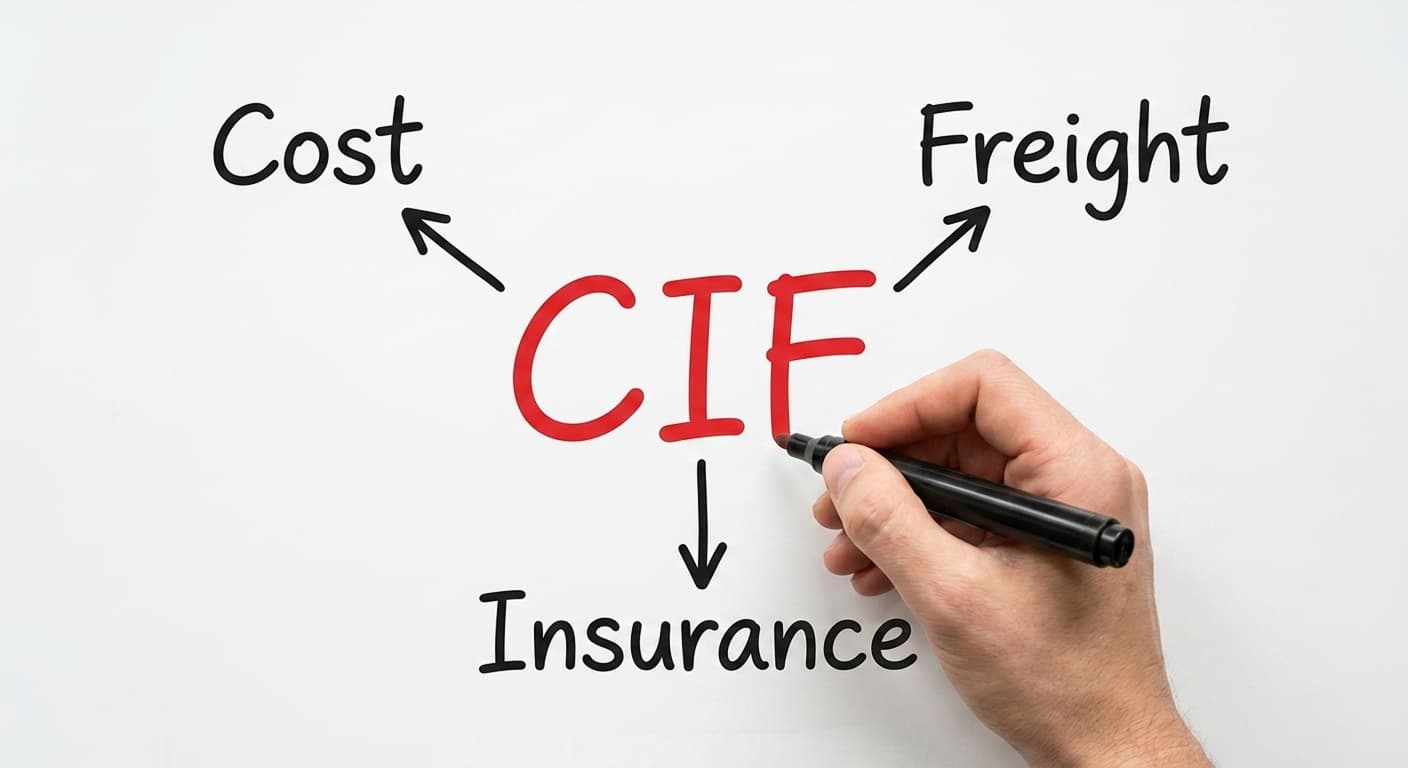
In plain language: The seller arranges and pays for freight and insurance to your destination port. You take over from there.
CIF looks convenient, the quoted price includes freight and basic insurance to, say, the Port of Brisbane or Melbourne. But once the goods arrive, import customs clearance, duties, GST, port handling, and last-mile delivery are still on you. There’s also a structural catch: because the exporter chooses the freight provider, they often use cheaper or less reliable carriers. You pay the CIF price without knowing whether you got the best rate. Most experienced importers prefer FOB precisely because it keeps the freight decision in their hands.
- Who it suits : Small test orders, or situations where the exporter has particularly strong freight relationships.
- For a first order : Read the fine print on what “basic insurance” actually covers before agreeing.
Under CIF, freight and basic insurance are already included in the quoted price, so you’re managing three remaining steps. You’ll need one to two vendors on your side, typically a customs broker and a delivery provider. Additional costs on top of the factory price generally fall between AUD $400 and $600.
DDP : Delivered Duty Paid
In plain language: The seller handles everything. Your goods arrive at your door, duties paid, with no further action required from you.
DDP is the opposite end of the spectrum from EXW. Under DDP, the seller is responsible for the entire logistics chain – freight, export clearance, international shipping, Australian customs clearance, duties, GST, and last-mile delivery. You approve the sample, confirm the order, and receive the goods. For a first-time founder, DDP removes the single biggest source of post-order complexity: navigating freight forwarders, customs brokers, and duty calculations for the first time, simultaneously, under time pressure.
The trade-off is that DDP pricing is typically higher than FOB, the logistics cost is built into the quoted price rather than invoiced separately. But for many founders, the cost of getting the logistics wrong on a first order – in time, mistakes, and unexpected fees, outweighs the premium.
- Who it suits : Founders placing a first order, or brands who want a single point of accountability for the process.
- For a first order : The lowest-risk option, if manufacturer offers it. Worth asking about before you default to FOB.
Under DDP, you manage zero steps and contact zero vendors independently. Every part of the logistics chain is handled by your manufacturer. The logistics cost is built into the quoted price rather than invoiced separately, so there are no additional costs to model and no surprise invoices after the fact.
Which Term Is Right for Your First Order?
The table below summarises the practical difference between the four terms. Steps refer to logistics actions the buyer must manage independently. Vendor contacts are the separate parties you need to brief and coordinate. Additional cost is the estimated spend on top of the factory price to land goods in Australia.
Our Advice for Start-Up Brands: Start Focused
The table below summarises the practical difference between the four terms. Steps refer to logistics actions the buyer must manage independently. Vendor contacts are the separate parties you need to brief and coordinate. Additional cost is the estimated spend on top of the factory price to land goods in Australia.
| Term | Buyer Manages | Best for | First Order? | Estimated Additional Cost |
|---|---|---|---|---|
| EXW | 7 steps (Everything from factory door) | Large brands with own freight teams | Not recommended | $1,150–$1,700 |
| FOB | 4 steps (Freight, customs, duties, delivery) | Founders with a freight forwarder ready | Fine, if you’ve modelled the full cost | $750–$1,170 |
| CIF | 3 steps (Customs, duties, delivery) | Small test orders | Read the insurance terms carefully | $400–$600 |
| DDP | Nothing. Just receive the goods | First-time founders, single accountability | Lowest-risk option | $0 |
The Number on the Quote Is Not the Number That Matters
Whichever term your factory quotes, the price on that line is not your product cost. It’s the starting point.
EXW and FOB require you to add freight, insurance, customs clearance, duties, and GST to arrive at your true landed cost. CIF gets you closer, but the final steps are still on you. Only DDP gives you a single number that reflects what your goods actually cost to land in Australia. Before you say yes to any factory quote, understand which term is being used, and what it means for the invoice that comes after.
About PassionWorks
We operate a manufacturing facility in Shanghai and a business office in Brisbane. For Australian brands, that combination makes a practical difference.
Communication runs on Australian business hours, in plain English, with no language barrier between you, your account manager, and the factory floor. Sample feedback, production updates, and queries are handled without the delays that come with working across time zones and translation layers.
Factory documentation and certifications are available in English on request, which simplifies compliance paperwork and any due diligence your business requires.
All quotes and invoices are issued in Australian dollars. No currency conversion, no USD fluctuation to factor into your budget. For most brands sourcing from overseas manufacturers, pricing in USD is the norm. With PassionWorks, what you see is what you plan around.
Meetings can be arranged in person for clients who prefer face-to-face at key stages of the process.
On shipping, we import into our Brisbane warehouse and ship Ex-Brisbane to Australian addresses. Freight, customs clearance, duties, and delivery are handled as part of the process. Whether that arrangement suits your order depends on the situation. Get in touch and we will work out what makes sense.
