
MOQ isn’t just a number. It’s a reflection of how your collection is structured, what fabrics you’ve chosen, and how efficiently your garments can move through production. Understanding this properly before you place your first order can save you from some of the most expensive mistakes a new brand can make.
There’s No Single MOQ, Here’s Why?
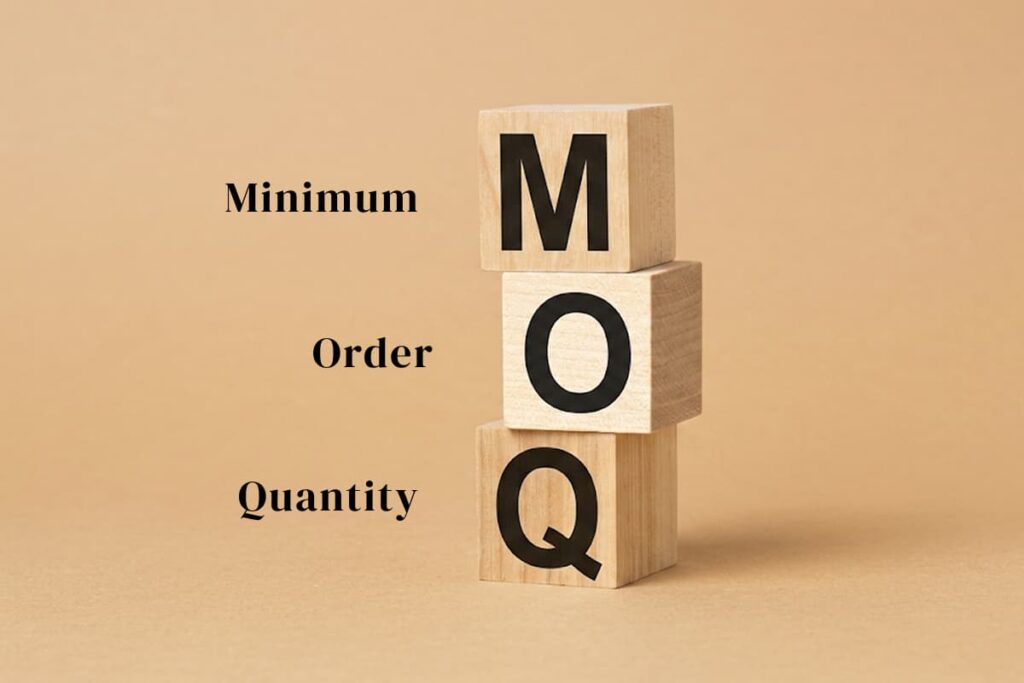
MOQ, “Minimum Order Quantity” is the smallest number of pieces a factory will produce in a single run. It’s not just a preference. It’s tied to production setup costs and, more importantly, how raw materials are bought.
Fabric is sold by the roll. If you order 10 shirts but only use half a roll, the rest sits as dead stock. The same goes for trims and zippers, which often come with their own purchase minimums. When quantities are too small, the material cost alone can outweigh the order value, which is why most factories simply won’t take the work.
Technically, our MOQ is 1 piece. Because we manage our own manufacturing and development process end to end, we’re able to produce even very small quantities — something most factories simply can’t offer. But there’s an important distinction: the production price depends heavily on whether your garment can run through an optimised bulk production workflow, or whether it needs to be handled more like an individual sample.
In practice, four main factors shape both your MOQ and your pricing :
- Fabric availability
- Colour availability
- Style complexity
- Quantity per style, colour, and size
Each of these variables affects production efficiency. And production efficiency is what drives price.
The Sweet Spot: Standard Production Quantities
For silk and silk-blend garments using stock fabrics in standard available colours, the optimal starting point for normal production pricing is 25 pieces per style, per colour, per size. This is the threshold where production becomes genuinely efficient — a balance that works for both the quality of the garment and the economics of making it.
Good to know: 25 pieces per style, per colour, per size is a realistic and achievable starting point for most startup brands working with stock fabrics. You don’t need to order hundreds of units to get started with us.
What Happens When You Go Smaller?
Smaller quantities are absolutely possible, but the production cost increases because those garments can no longer move through the most efficient workflow. Below 25 pieces, the order is too small for a regular production line — which means fewer layers when cutting, less task specialisation, and higher labour cost per piece.
At very low quantities, garments move into the sample room, where one person handles most or all of the construction from start to finish. That’s the most labour-intensive way to produce a garment, and the cost reflects it.
As a general guide:
| Quantity | Production Cost Adjustment |
|---|---|
| 25+ pieces | Standard production pricing |
| 10-24 pieces | Approximately +20% on production cost |
| Below 10 pieces | Approximately +50% on production cost |
On timing : Standard bulk orders typically move through production in approximately 2 to 3 months. When quantities fall below the efficient threshold, lead times can extend as these garments require a more hands-on approach at each stage. It’s worth factoring this into your launch timeline from the very beginning.
Fabric Availability: The Biggest Variable
Of all the factors that influence MOQ, fabric availability tends to have the greatest impact — and it’s one that many new brands don’t anticipate.
Stock fabric in a standard colour
If a suitable stock fabric exists in a standard colour, you’re in a flexible position: MOQ requirements stay manageable, smaller quantities are more achievable, and pricing remains competitive. In many cases, we first need to confirm whether suitable stock fabric suppliers are available before we can finalise both the MOQ and the pricing for your project.
One advantage we offer is that Passionworks works directly with fabric manufacturers. This direct relationship means we can secure better sourcing conditions on behalf of our clients — something that simply isn’t possible when working through intermediaries.
Custom colours and specially developed fabrics
Custom colours and specially developed fabrics are a different matter entirely. Mills typically require minimum dye quantities, and bespoke fabric production requires dedicated production runs. A silk roll is typically 45 metres, and how many garments you get from that depends entirely on how much fabric each style uses. A slip dress needs relatively little; a long robe considerably more. As a rule of thumb: the cheaper the base fabric, the higher the mill’s minimum tends to be.
On timing : If your design calls for a custom-developed fabric, build in additional lead time for the mill development and sampling stage before a single garment is cut. Starting with stock fabrics wherever possible keeps your timeline, and your budget in better shape.
Why Sizes and Colours Add Up Faster Than You Think
This is one of the most important things for new brands to understand: even a modest collection can quickly become a substantial production commitment once you factor in multiple sizes and colours.
A size run from XS to XL is already five groups. Add just two colourways and your quantity requirements immediately double. What starts as a small capsule collection can very quickly translate into a large production order, and a significant financial commitment, simply through the multiplication of sizes and colours.
Our Advice for Start-Up Brands: Start Focused
For new brands, we consistently recommend keeping your first collection tight, focused, and commercially manageable. Starting with 3 to 5 strong styles in 1 to 2 colours is significantly more efficient than launching a large collection immediately, it reduces development costs, MOQ pressure, and production complexity, and it usually makes for a stronger, more cohesive first collection.
One of the most effective strategies is sharing materials across multiple styles, using the same fabric, lace, buttons, or trims throughout your collection.
It reduces;
- Reduces development costs
- Eases MOQ pressure across styles
- Limits inventory fragmentation
- Simplifies the production process
From a customer’s perspective, it also creates exactly the kind of cohesive aesthetic that makes a first collection feel considered and deliberate, rather than scattered.
The Bottom Line
MOQ isn’t a fixed number. It’s a conversation. And it’s a conversation worth having early.
The right quantity for your brand depends on the fabrics and colours you choose, the complexity of your styles, and how you structure your collection overall. By starting with focused choices and shared materials, you give yourself the best possible foundation: manageable costs, efficient production, and a collection that’s genuinely ready to go to market.
If you’d like to discuss your specific project and get a clearer picture of what’s achievable at your scale, we’re always happy to talk it through.
