
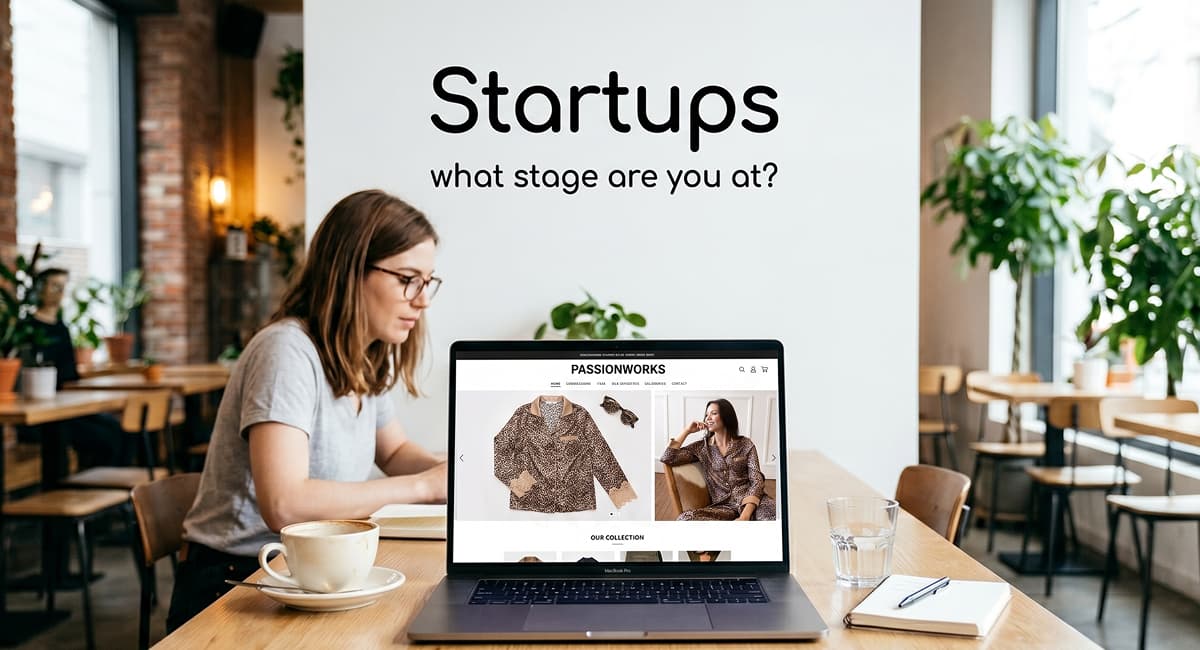
Imagine you have a vision for your own brand, and sketched out in your head or scribbled in a notebook. You sit down and send your first email to a garment manufacturer :
“Hi, I’d love to start my own lingerie brand — think bras, panties, camisoles, and sleepwear. I’m considering 25 pieces per style. What is your MOQ? Is 25 pieces possible?”
It sounds like a complete question.
But from a manufacturer’s perspective, it’s almost impossible to answer properly, because the most important information is missing. A bra made from stretch lace with underwire and removable padding is an entirely different product to a bra made from silk charmeuse with minimal structure. The fabric, the construction, the machinery required, the MOQ, and the price per piece — everything changes depending on those details.
The more specific your question, the more useful the answer you’ll get back.
The 4 Stages of a Startup, And What a Factory Can Tell You at Each One.

Stage 1 : The Idea Stage
“I want to start a brand. I’m thinking lingerie — something feminine and premium.”
This stage is about finding out if you’re even talking to the right factory. Keep the conversation broad, and listen for red flags — a good factory will ask you questions back, not just throw numbers at you.
What you can ask:
- Is this product category something you work with?
- What fabrics do you specialise in?
- What is your general MOQ range?
What a factory can tell you:
- Whether your product category is within their capabilities
- A very rough MOQ range
- General fabric options
What they can’t tell you yet:
- Pricing (too vague to quote)
- Exact MOQ (depends on fabric and construction)
- Lead times (depends on complexity)
Tips to Get More
Check these four details, it looks simple. But they change everything. A factory can tell you within minutes whether you’re a realistic fit, and you won’t waste weeks going back and forth on the wrong questions.
- What you’re making – be specific. “Feminine sleepwear” tells us far more than just “clothing.”
- Who it’s for and what it costs – for example, “premium brand, targeting AUD $150–$200 retail.”
- How many styles – even a rough number helps. Are you launching with 2 styles or 10?
- Where you’re based – Australia or overseas? This affects shipping, lead times, and how we work together.
Stage 2 : The Sketch or Inspiration Stage
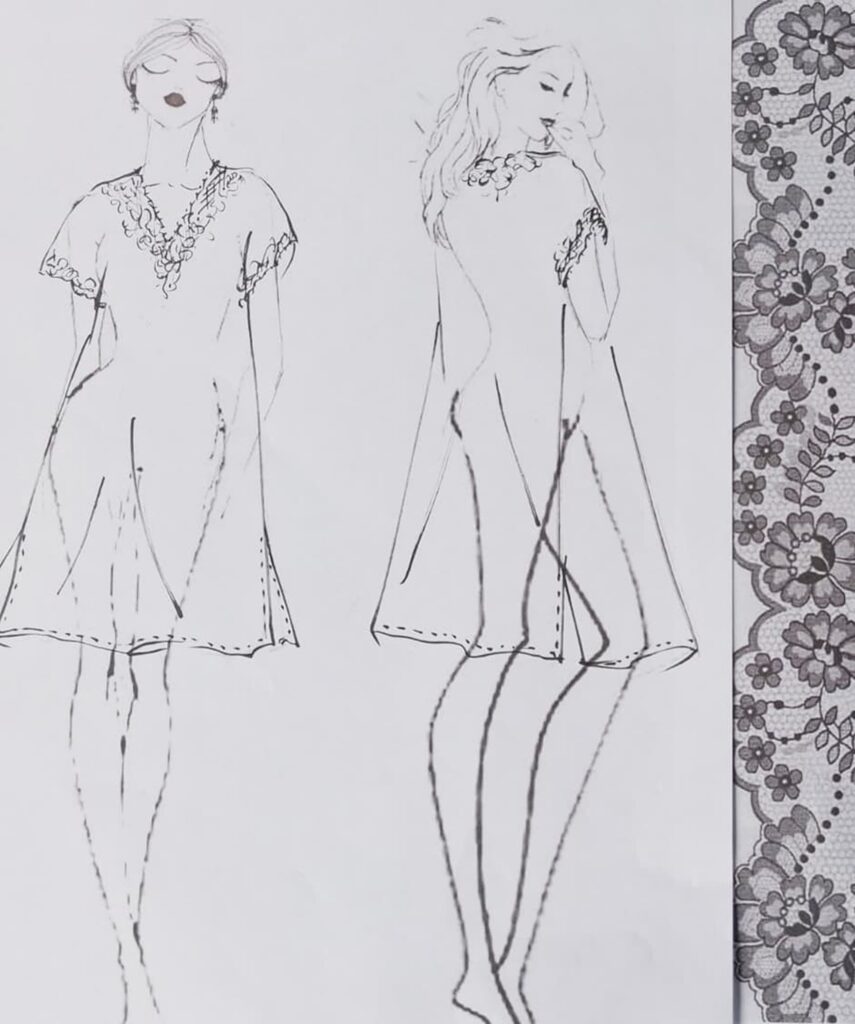
“I want to start a brand. I’m thinking lingerie, something feminine and premium. I have some reference images, a slip dress with lace trim, similar to this photo. I want it in silk.”
This is actually a great stage to reach out. A reference image tells a factory a lot. You’ll get meaningful feedback on feasibility, materials, and rough costs — enough to decide whether to move forward.
What you can ask:
- Can you produce something like this?
- What fabric would you recommend for this style?
- Do you have existing base designs I could adapt?
- What would pattern development cost?
What a factory can tell you:
- Whether the style is producible
- Fabric recommendations based on your reference
- A rough development cost range (pattern + sampling)
- An indicative MOQ based on the fabric direction
What they still can’t tell you:
- Exact unit pricing (no measurements or specs yet)
- Precise lead times
Tips to Get More
The more visual your references, the better. A single photo can communicate what words often can’t.
- Send as many reference images as you can – front, back, and detail shots all help.
- Share your fabric preference if you have one – for example, “I’m thinking silk charmeuse.”
- Tell us your target retail price – this single piece of information guides almost every material decision.
- Let us know your development approach – are you adapting an existing base design, or starting from scratch?
- Give us a rough timeline – for example, “I’d like samples within 3 months.”
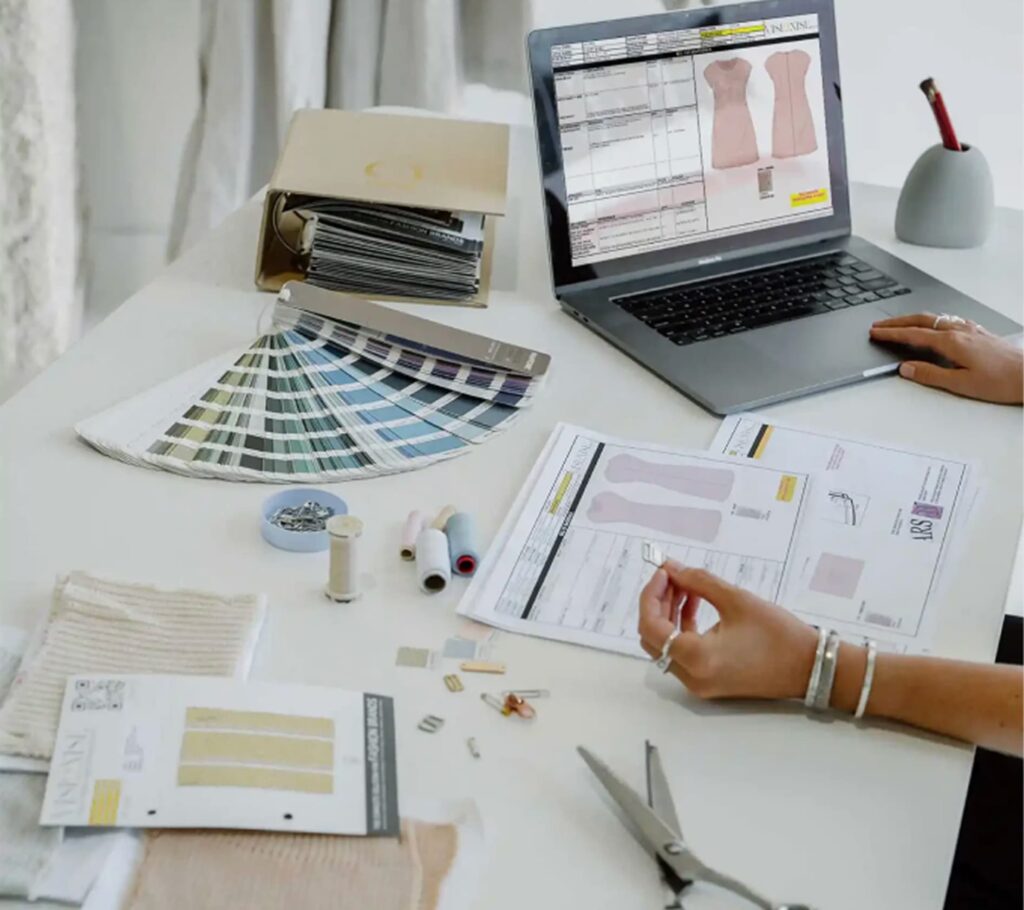
Stage 3 : The Tech Pack Stage
“I have a full tech pack — measurements, construction details, fabric specs, and trim requirements.“
This is where conversations become concrete. If you have a tech pack, you’re in a strong position to get accurate, comparable quotes from multiple factories.
What you can ask:
- Can you quote this exactly?
- What is the MOQ for this specific fabric and construction?
- What is the sampling lead time?
- What is the bulk production lead time?
What a factory can tell you:
- A precise unit price quote
- Exact MOQ for your specific fabric and colour
- Accurate sampling and production timelines
- Any construction challenges or suggested modifications
Tips to Get More
With these details alongside your tech pack, a factory can give you a quote that’s genuinely accurate — not a rough estimate that shifts once production begins.
- Your tech pack — and flag any sections you’re unsure about. A factory can help fill the gaps.
- Your colourway options — let us know whether colours are standard or custom-dyed.
- Your size range and size split — for example, 30% S, 40% M, 30% L.
- Your target cost per unit — whether that’s FOB or landed, knowing your number helps us work backwards.
- Packaging requirements — do you need labels, hangtags, or custom packaging included?
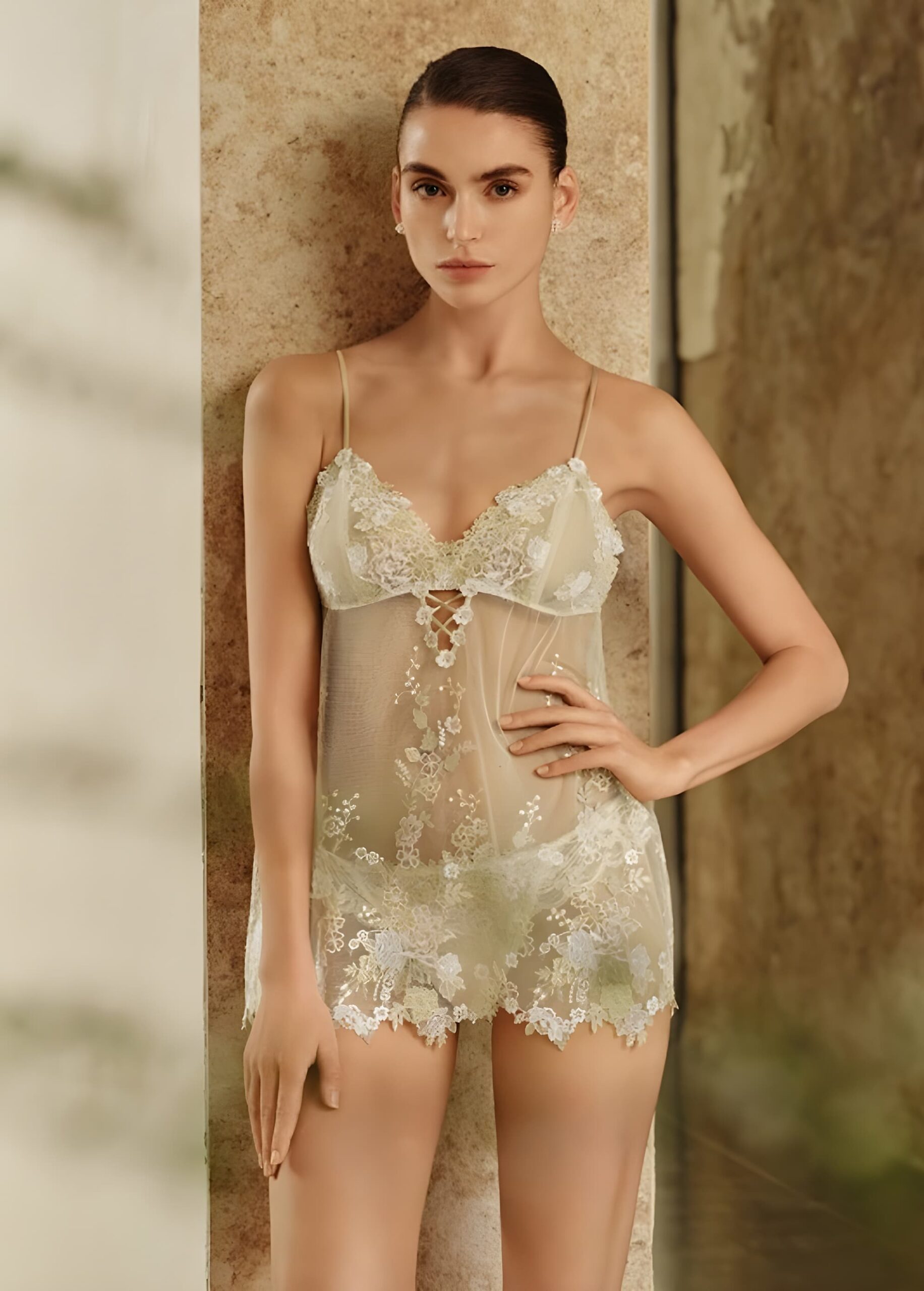
Stage 4 : The Sample Stage
“I already have a sample — I want to move into production.“
At this stage, you’re not exploring anymore — you’re deciding. The conversation shifts from “is this possible?” to “how do we make this happen?”
What you can ask:
- Can you match or improve on this sample?
- What adjustments would you recommend before bulk?
- What is the production lead time for X quantity?
- What are your payment terms?
What a factory can tell you:
- Whether they can replicate or improve the sample
- Production pricing and timeline
- Any fabric or construction modifications for efficiency
Tips to Get More
At this stage, precision is everything. The more clearly you communicate, the faster production moves — and the fewer costly surprises along the way.
- Your approved sample — either the physical piece, or detailed photos with measurements.
- A clear list of changes — note exactly what needs to be different from the previous sample round.
- Your confirmed order details — final quantity, colourways, and size split.
- Your target delivery date — start with when you need the goods, and work backwards from there.
- Your preferred shipping terms — Ex-Works from our facility, or delivered directly to your address.
The More You Bring To The Conversation, The More You’ll Get Out Of It.
You don’t need to be at Stage 3 or 4 to contact us. We regularly work with founders at Stage 1 and 2 — and we’ll always tell you honestly what we can and can’t answer at that point.
But if you want the most useful response possible, try to come with at least one of the following:
- A reference image or sketch
- A fabric preference
- An idea of your target retail price
- An estimated quantity
Even one of these makes the conversation significantly more productive — for both of us.
