
1. What is your MOQ, and can I really start small?
This is the number one question we get, without exception.
But first, what exactly is MOQ?
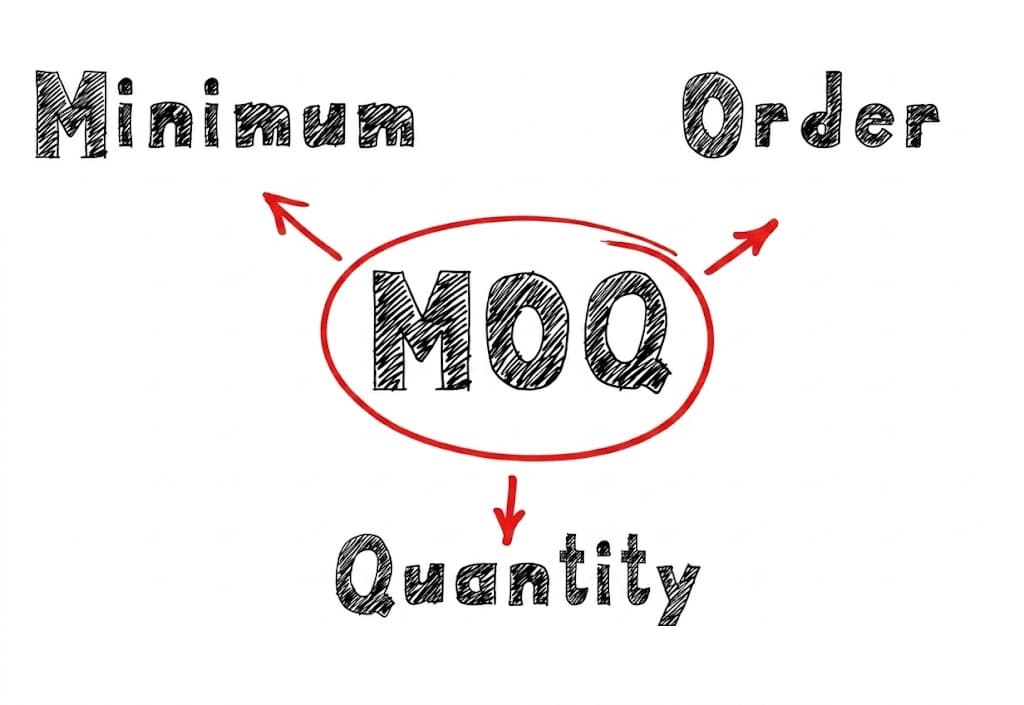
MOQ stands for ‘Minimum Order Quantity‘, the smallest number of pieces a garment factory will produce in a single run. It’s not just a preference. It’s tied to production setup costs and, more importantly, how raw materials are bought.
Fabric is sold by the roll. If you order 10 shirts but only use half a roll, the rest sits as dead stock. The same goes for trims and zippers, which often come with their own purchase minimums. When quantities are too small, the material cost alone can outweigh the order value, which is why most factories simply won’t take the work.
At Passionworks, we don’t have a fixed MOQ.
Technically, our MOQ is 1 piece. Because we manage our own development and manufacturing process, we can support very small runs and start-up brands. However, the production price depends heavily on whether the garment can run through an optimised bulk production process, or whether it needs to be handled more like an individual sample garment. The smaller the order, the higher the cost per piece.
There is no single fixed MOQ because it depends on fabric type, fabric availability, colour, style complexity, and garment construction.
For silk and silk-blend garments specifically, using stock fabrics in standard colours, our standard production threshold is generally 25 pieces per style, per colour, per size.
Below 25 pieces, this efficiency breaks down. The order is too small for the regular production workflow, which means fewer layers when cutting, less task specialisation, and higher labour cost per piece. At very low quantities, garments move into the sample room, where one person does most or all of the construction from start to finish. That’s the most labour-intensive way to produce a garment, and the cost reflects it.
As a general guide:
- 10 to 24 pieces: approximately 20% higher on production cost
- Below 10 pieces: approximately 50% higher
Fabric and colour choices affect MOQ just as much as quantity. If a suitable stock fabric exists in a standard colour, smaller runs stay manageable. If a specific colour needs to be dyed, the fabric mill usually requires a full roll to be produced first. A roll is typically 45 metres, and how many garments you get from that depends entirely on how much fabric each style uses. A slip dress needs relatively little; a long robe considerably more. Generally, the cheaper the base fabric, the higher the mill’s minimum tends to be.
One thing many first-time founders don’t see coming
Sizes and colours also multiply quantities quickly. A size run from XS to XL is already five groups. Add two colourways and your quantity doubles instantly. For first collections, we generally recommend fewer styles, fewer colours, and shared fabrics and trims across styles where possible. Starting with 3 to 5 strong styles in 1 to 2 colours is significantly more efficient than launching a large collection immediately. It reduces development costs, MOQ pressure, and production complexity, and it usually makes for a stronger, more cohesive first collection.
Good to Know
Small quantities are possible when you choose the right materials and colours — keep this in mind when making your design decisions. You don’t need to order hundreds of units to get started with us.
drop patterns into the canvas.
2. I don’t have a tech pack. Can I still start?
Absolutely. This is one of the most common worries we hear from first-time founders, and it really doesn’t need to be.
But first — what exactly is a tech pack?
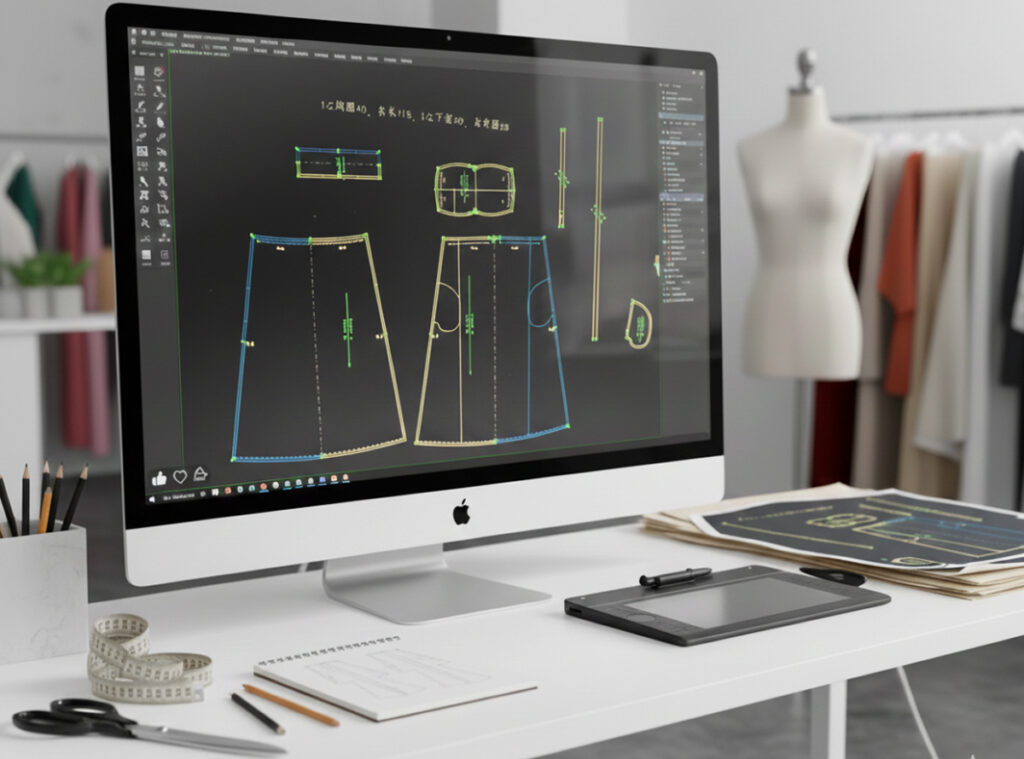
A tech pack (short for Technical Package) is the document a factory uses to produce your garment. Think of it as the blueprint for your design. A full one includes measurements and sizing, fabric specs, construction notes, trim details, colourways, and sketches.
At Passionworks, you don’t need a tech pack to get started.
You don’t need one to start a conversation with us. Most of our startup clients come to us at concept stage with nothing more than inspiration images, a Pinterest board, or rough sketches. That’s completely fine. We’ll work through it together.
Many companies offer tech packs as a paid service. For us, developing the technical documentation, including pattern making, measurements, construction details, and size grading, is part of our production process, not a separate charge. It’s simply how we work.
Here’s how the process typically goes :
- Share your inspiration images or sketches
- We review your ideas together and define the styles, fabrics, and construction details
- Pattern development, where all technical documentation is created
- Sampling
- Bulk production
Good to Know
A tech pack is not necessary. Bring your ideas in any form and we’ll help you build from there.
3. How much do samples cost, and how long do they take?
Before bulk production, every garment goes through a development and sampling stage. Each sample is made individually by our sample makers rather than through a production line, so the cost per piece is higher than bulk pricing.
Typical costs are :
| Process | Cost | Timeline |
|---|---|---|
| Paper Pattern | AUD $100 – $300 (GST per style) | Depending on complexity, number of pattern pieces, and garment construction |
| Sample per piece | AUD $50 – $200 (GST per piece) | 2–3 weeks (depending on fabric, trims, embellishment, and construction complexity) |
| Bulk production | Quoted per project | 50–70 days (Size grading is included in the bulk production quotation, not charged separately) |
One thing worth knowing: unlike companies that charge for tech packs as a standalone service, we create all technical documentation as part of our production process. It’s not an extra cost for you.
Expect multiple rounds of sampling. After receiving the first sample, revisions are often needed to refine fit, proportions, fabric feel, construction, or finishing details. Each additional revision round is charged separately, so it’s worth allowing for this in your planning.
Typical timing:
- Sample development: approximately 2 to 3 weeks
- Bulk production: approximately 2 to 3 months
Lead times can extend if custom colours need to be dyed, special fabrics are required, or the style has complex construction. For first collections, we recommend building in extra buffer time for the sampling stage.
Good to Know
Sampling is not a cost to minimise. It’s how you get the product right before committing to bulk. Building revision rounds into your timeline and budget from the start is always the smarter approach.
4. What fabrics can you work with, and what styles are possible?
We work with a broad range of fabrics. However, our core expertise is silk and silk-blend fabrics. It’s genuinely part of our DNA.
Fabrics we commonly work with :
- Silk and silk blends
- Viscose satin
- Cotton and silk blends
- Modal and bamboo
- Polyester satin
- Lace trims, from affordable options through to premium Leavers lace
Styles we specialise in :
- Slip dresses and satin-finish garments
- Camisoles, pyjama sets, and loungewear
- Resort wear and lightweight woven garments
- Lace-trimmed and embellished pieces
Good to know
Your fabric choice directly affects MOQ, unit cost, and how your product sits at retail. It’s worth thinking about early.
5. How do I get a quote?
To give you an accurate quote, we need a few basics :
- The style you want to produce
- Your preferred fabric
- Estimated quantities
- Any special details such as lace, embellishments, or lining
- Target retail price, this can help to define the fabric selection
Good to know
You don’t need everything locked down. Even a rough idea, a photo, a screenshot, or a sketch, is enough to start a conversation and give you a realistic ballpark.
