
Quality is never just the fabric. The finest silk still becomes a garment one stitch at a time, and it is the stitching, not the fabric alone, that decides whether a piece lasts. A beautiful silk with a weak seam is still a garment that fails.
In the last post, the hem was where silk gave itself away. The seam is the other place. A hem is what a customer sees first, but a seam is what holds the whole garment together, every time it is worn. On silk, a poorly sewn seam does not just look wrong. It fails.
This post explains why silk seams are so hard to get right, what goes wrong when they are not, and how the right thread and technique keep a seam holding through real wear.
Why Silk Seams Are Hard To Sew
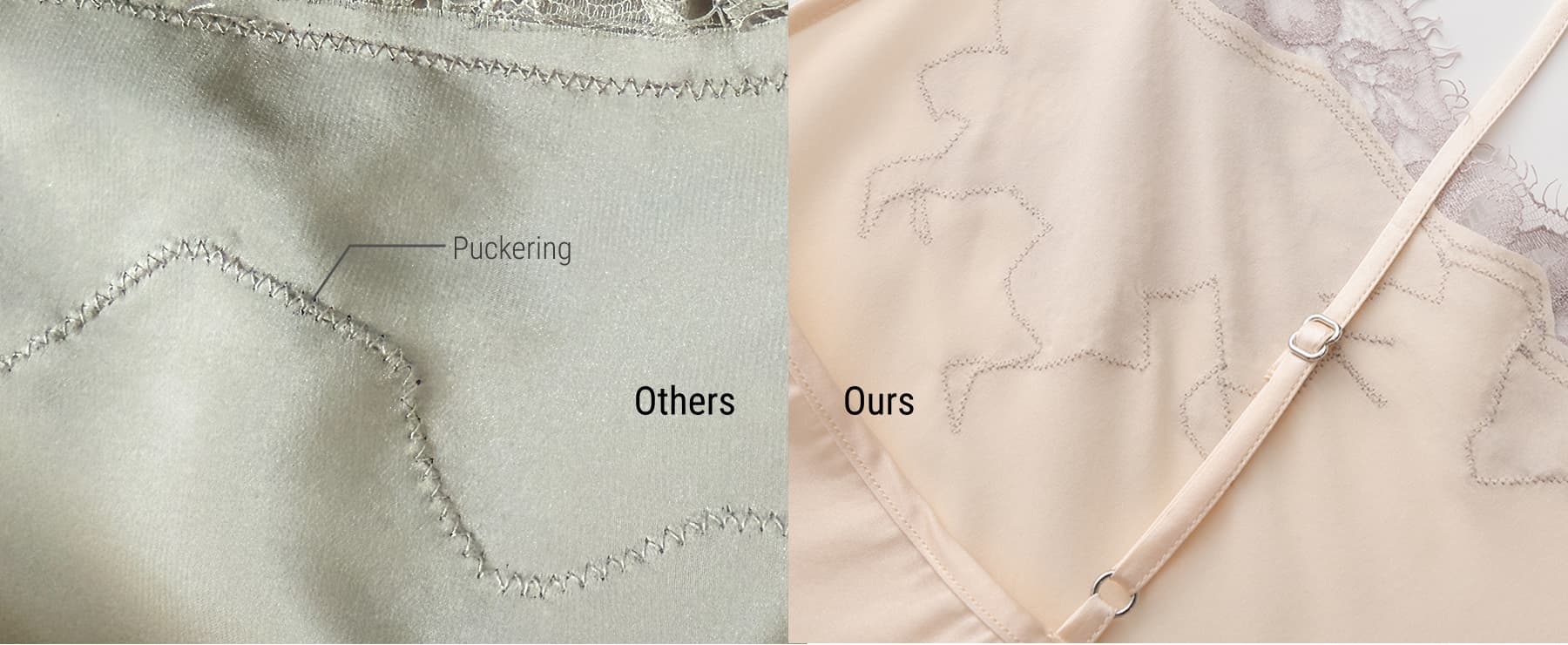
On the left, the stitching pulls the silk in and puckers along the seam, exactly as marked. On silk this happens when the tension, needle, or stitch is wrong for the fabric, and it only deepens with wear and washing.
Most fabrics cooperate when you sew them. Cotton grips itself, holds still under the needle, and stays where the stitches put it. Silk does the opposite. It is thin, smooth, and slippery, and the threads inside the weave slide against each other instead of locking together. That is exactly what makes silk feel so beautiful to wear, and exactly what makes it so hard to sew.
Here is the problem. Every time a garment is worn, the seams come under tension, from movement, from stretching, from the simple pull of the fabric’s own weight. On a stable fabric, the seam holds.
On silk, that tension can make the smooth threads creep apart right at the stitch line, until the seam begins to separate. This is called seam slippage, and it is one of the most common ways silk garments fail. It is a seam that was not built to handle how silk behaves.
A weak or loose seam on silk shows up fast, and always at the worst time:
- The seam pulls open – small gaps appear along the stitch line, and the fabric looks like it is coming apart, even though nothing is torn.
- Threads protrude – the seam edge sticks out instead of lying flat. It is visible from the outside and scratchy against the skin, which is the last thing you want in a piece worn next to the body.
- The seam puckers – the stitch line gathers and wrinkles instead of falling smoothly, the same flaw that ruins a poor hem, now running down the seam.
Any one of these can turn a finished garment into a reject before it ever ships. Worse, these problems often stay hidden until the piece has been worn and washed a few times, which means they appear after the customer already has it in their hands. At that point it is no longer a quality issue. It is a return, a refund, and a customer who will think twice before buying again.
What A Weak Seam Costs
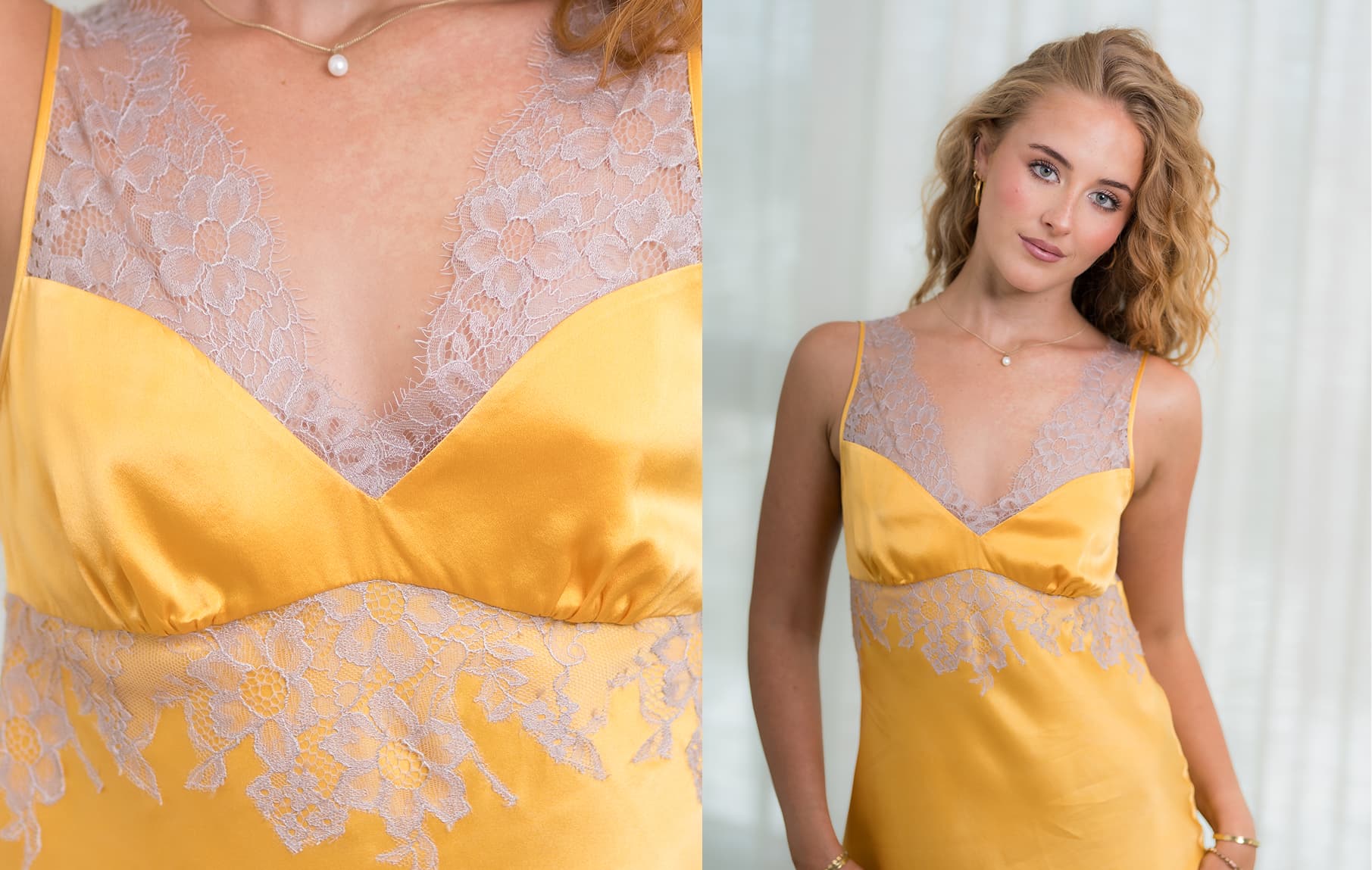
A seam is not a cosmetic detail. It is the structure of the garment, the thing that holds every panel together and decides how the whole piece hangs on the body. When the seams are wrong, the garment fails in more ways than most people expect, and not all of them take weeks to show.
Some problems appear the moment the piece is finished. If the left and right seams are not sewn to match, the garment hangs unevenly, one side pulling shorter or twisting forward. Front and back panels that are not aligned throw the whole silhouette off. And because silk is thin and slippery, an uneven seam gathers as it is sewn, so the stitch line ripples and puckers instead of falling straight. On a matte fabric this might hide. On silk, which catches the light, every ripple shows.
Bias-cut pieces are the hardest of all. Slip dresses, camisoles, and bias skirts get their fluid drape from being cut on the diagonal, but that same diagonal stretches under the needle. Sewn with the wrong tension or technique, the fabric grows along the seam, and the piece twists on the body or hangs longer on one side. The drape that makes bias silk beautiful is exactly what a poor seam destroys.
Then there is durability. When a silk seam slips or opens, the threads pull apart at the stitch line and the piece simply cannot be worn. This is the failure that shows up at the worst time, after the customer has worn and washed the garment, long after it left your hands.
Put together, this is why seams matter more than they seem to. A hem that looks cheap is a first impression problem. A seam that fails is a structural one, and it leads to uneven garments rejected before shipping, and returns, bad reviews, and lost trust for the ones that make it out the door.
How PassionWorks Sews a Silk Seam
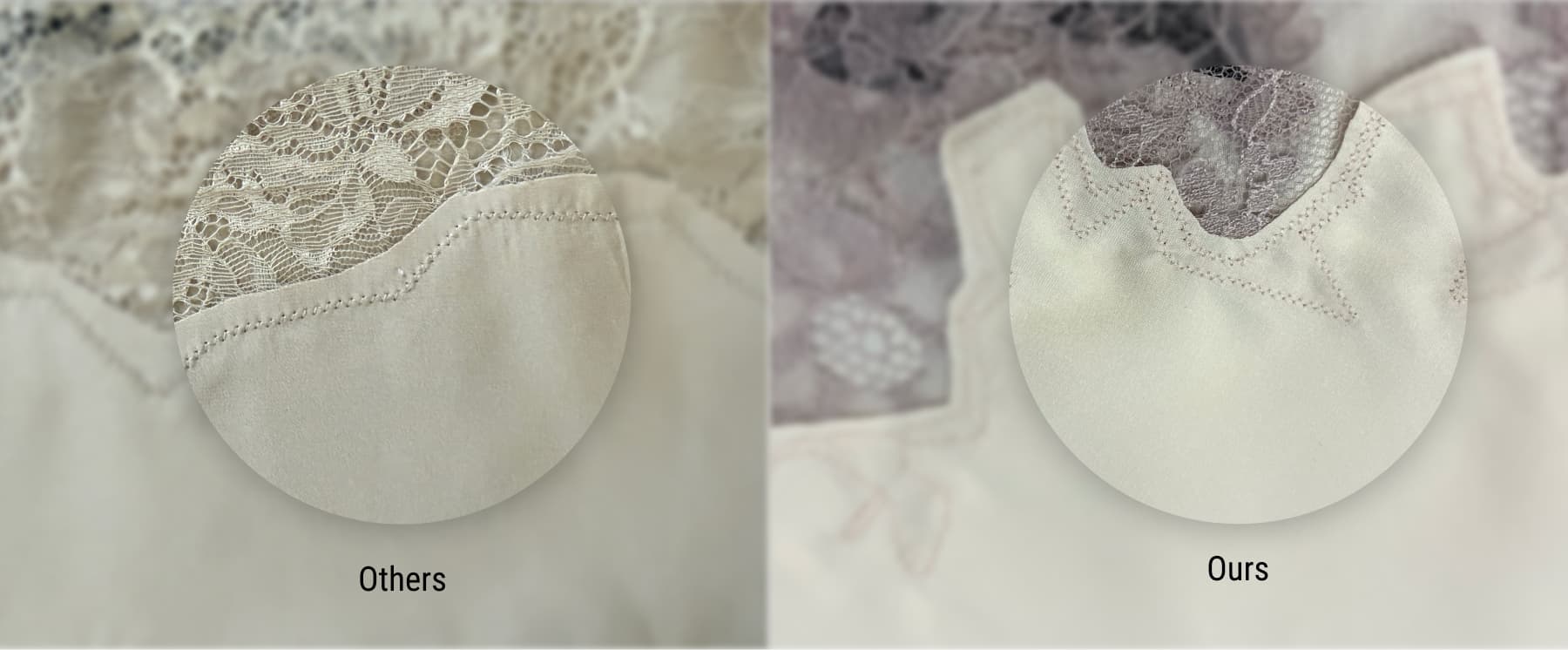
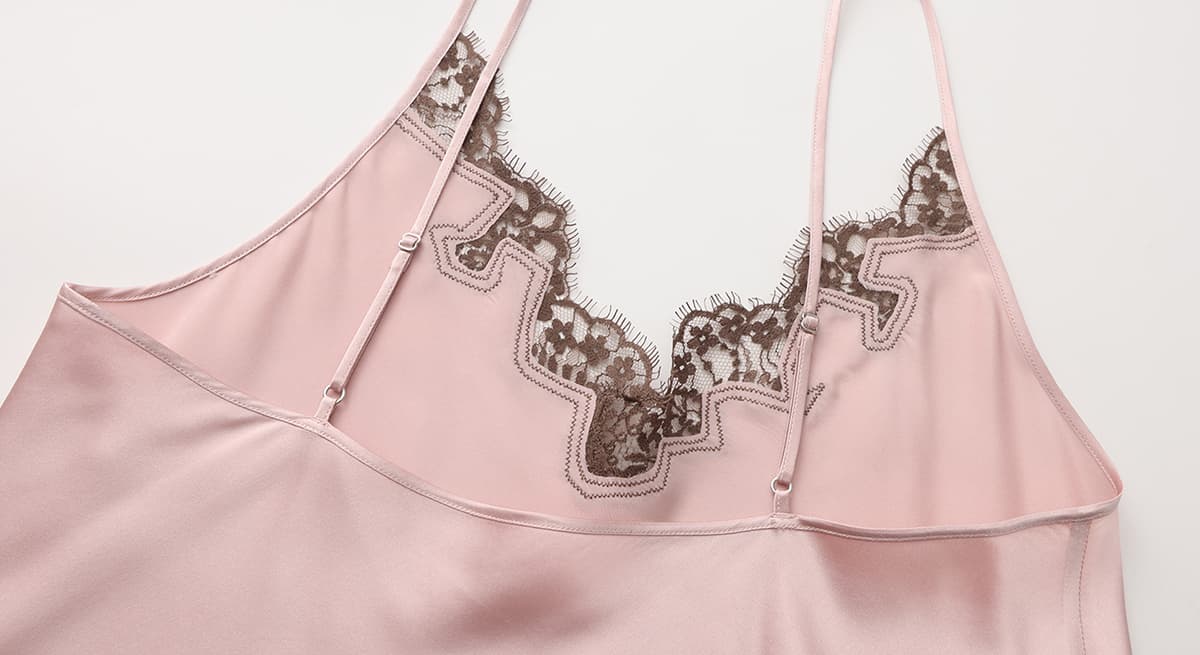
On the left, the stitching where the lace meets the silk is uneven and bulky, and the seam puckers instead of lying flat. A join sewn like this works loose over time and shows from the outside.
Two things make the difference on a silk seam: how it is sewn, and what it is sewn with.
Double stitching.
Most seams are sewn with a single line of stitching. On silk, we use a double stitch instead. A second row of stitching does more than add strength, it spreads the tension across more thread and more fabric, so no single point takes the full strain when the garment is worn or stretched. It grips the slippery weave in two places instead of one, which is exactly what silk needs to resist slipping apart. It is slower to sew and uses more thread, so it costs more to produce. That is the point. It is the difference between a seam that survives the photoshoot and one that survives years of real wear.
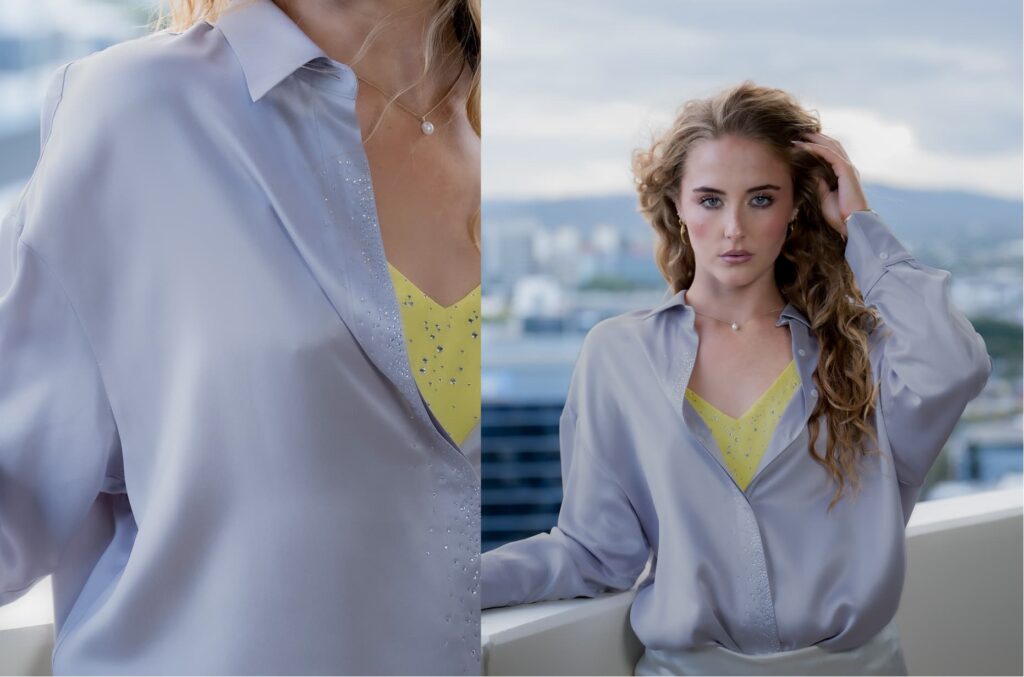
The best thread in its class.
The thread is the other half of the equation, and it is the part most factories quietly cut to save money. Cheap thread is thinner, weaker, and less consistent, and it is almost always the first thing to give out after a few washes, long before the fabric itself wears down. We use Coats Astra, a thread trusted across the garment industry for strong, consistent seams that hold their shape over the life of the piece. It costs more than standard thread. On a fabric as fine and as expensive as silk, spending less on the one component that holds it all together makes no sense.
Together, the double stitch and the stronger thread mean the seam is built to last, not just to look right on day one. It is quiet, invisible work. Done well, no one ever notices it, which is exactly how it should be.
The PassionWorks Difference
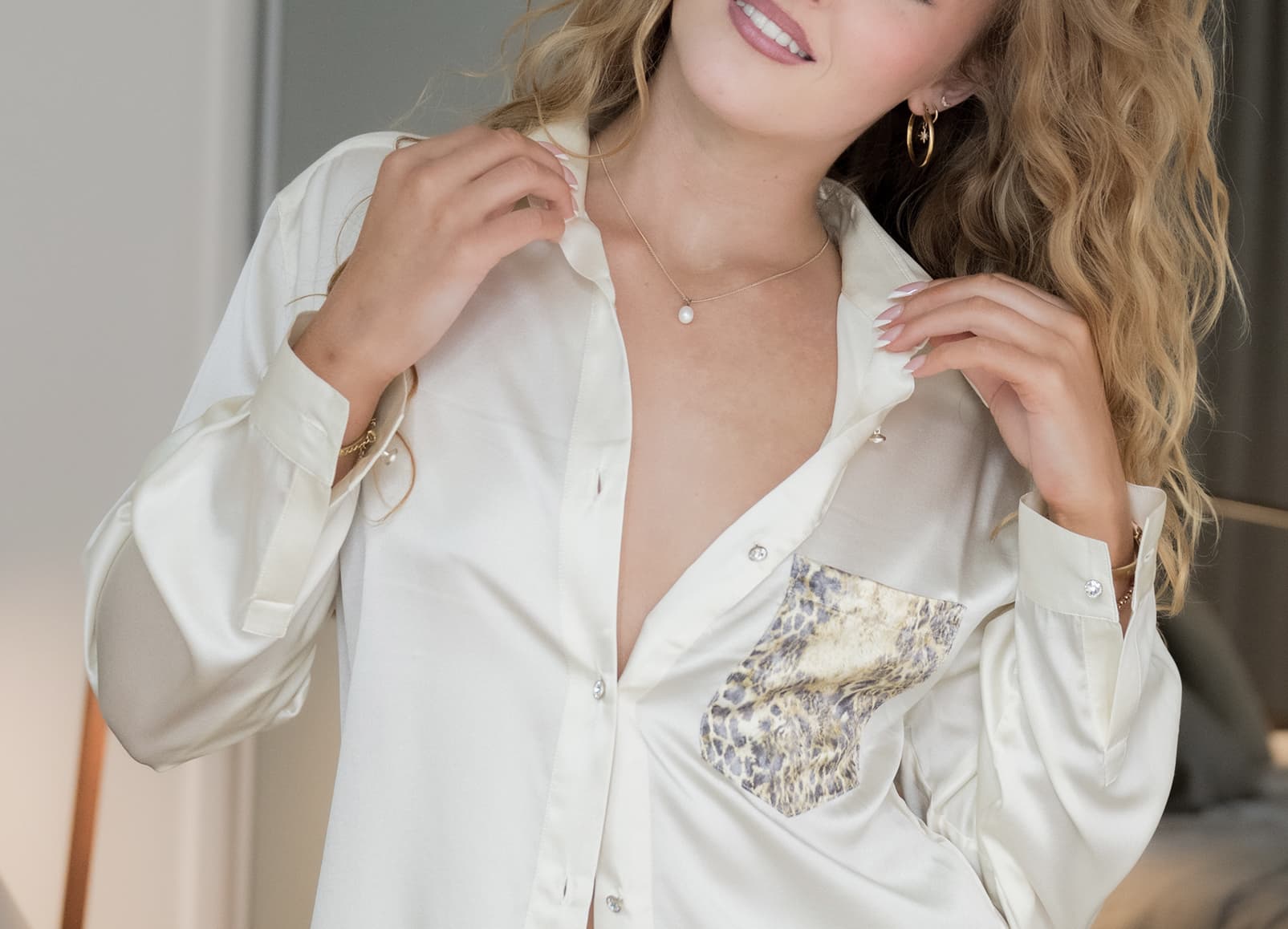
Silk is a specialty at PassionWorks, not an occasional project, and the seam is where that experience shows most clearly. Our artisans sew silk every day. They know how it moves, where it wants to slip, and how to build a seam that holds against all of it, and many of them have worked with us for years. It is the reason two factories can be given the same fabric and the same design, and send back two very different garments.
We also refuse to save money in the places a customer will feel later. The double stitching, the better thread, the extra time on every seam, these are deliberate choices, and they are the choices that decide whether your brand is remembered for quality or for a seam that came apart.
A good seam is invisible when it works and impossible to hide when it fails. We build ours to hold. If you are creating a silk collection and want it made properly from the first stitch, visit our Brisbane showroom to see and feel the finish in person, and our team will help you get it right from the very first sample.
