

A brand owner’s guide to the 5 quality control stages that protect your product, and your business. Most founders check if a factory can make their product. But very few check if the factory can catch what goes wrong. There’s a big difference, and that gap shows up when your product reaches your customer.”
A big brand can absorb a 1% defect rate across 10,000 units. But 1% of your first 100-piece order is just 1 item, and if that 1 item reaches your first customer, it becomes your first bad review, your first complaint, and in the worst case, your first lawsuit. And when it does, the damage lands on you. Not the factory. You.
That’s why understanding what happens inside a well-managed factory, “stage by stage” is one of the most important things you can do before placing your order. Here are the 5 QC stages that separate a factory you can trust from one you can’t.
1. Incoming Material Inspection
Before production starts, when fabric and materials arrive at the factory.
Colour Matching
The fabric arriving at the factory is checked against the approved colour swatch — the version you signed off on. This is typically done under standard lighting conditions (such as D65 or a client-specified light source), rather than relying on ambient indoor lighting, as colours can appear inconsistent under different light sources.
Even within the same factory, slight shade variations can occur between dye batches — this is known as a “lot difference” and is a common occurrence in textile production.
If Skipped
If this step is not properly controlled, and different lots are mixed during cutting or sewing, garments within the same order may show visible shade variation. In such cases, factories usually need to separate production by lot or manage shade grouping, otherwise it may affect the consistency of matching sets and increase the risk of customer complaints or returns.
Fabric width and weight (GSM)
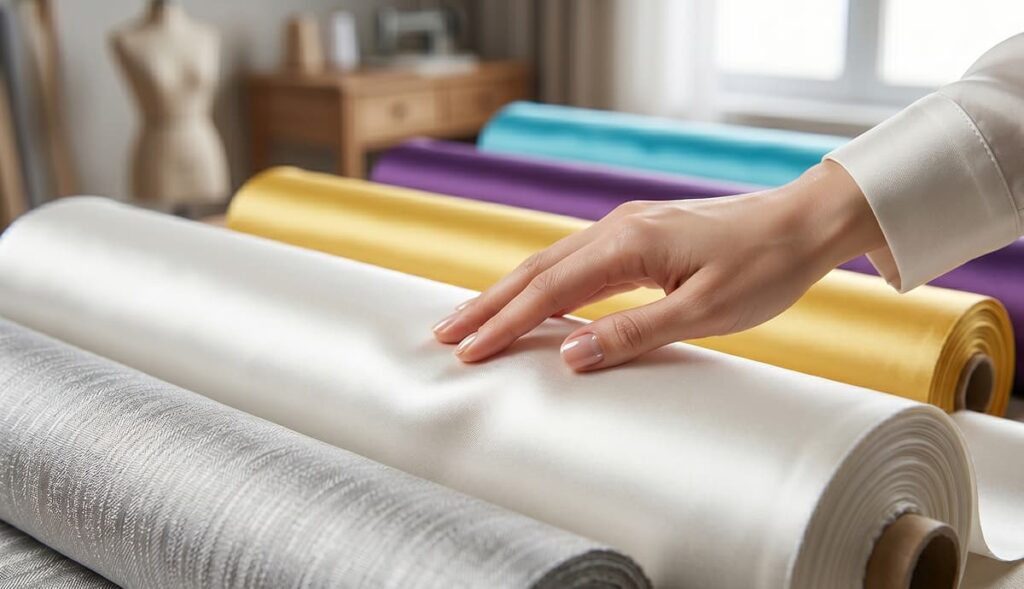
Fabric width and GSM are checked against the specifications stated in your order. Even small variations — such as a slightly narrower roll or minor GSM fluctuation — are carefully assessed, as they can affect production planning and final garment performance.
In real production, both width and GSM always come with acceptable tolerance ranges. The factory’s role is not only to “match the exact number”, but to evaluate whether the fabric still falls within an acceptable production range and whether it will affect cutting efficiency or garment structure.
If Skipped
If this step is not properly managed, issues may arise during cutting or sewing. For example, narrower fabric can reduce marker efficiency and increase fabric consumption, while lower GSM may affect the hand feel and drape compared to the approved sample. In such cases, adjustments need to be made before bulk cutting begins to avoid inconsistencies in the final garments.
Fabric defects
Every fabric roll is opened and inspected carefully for stains, holes, snags, uneven thickness, and faint streaks from uneven dyeing. Anything found gets marked so it can be avoided during cutting — or the roll gets rejected entirely.
If Skipped
A hidden stain or hole gets cut into a pattern piece and becomes a defective finished garment. You’ve paid for the fabric. You’ve paid for the labour. And you still can’t sell the piece.
Trims and accessories
It’s not just the fabric. Everything that goes into the garment – zippers, buttons, lace, elastic, padding, and all label types — gets checked here too. Color, size, quality, and harmful chemical content are all verified against your approved spec.
If Skipped
A wrong zipper color, an untested button with high lead content, or an incorrect care label can result in anything from a customer complaint to a failed customs inspection — or in serious cases, a product recall.
Don’t overlook the labels either. A wrong fabric composition on a care label sounds minor, but it can lead to a direct consumer claim if a customer damages their garment following incorrect wash instructions.
2. Cutting Inspection
When the fabric is cut into pattern pieces
Think of this stage like cutting a cake into eight equal slices. If the cuts are off, no amount of decorating will make the slices look even. The same is true here — if the cutting is inaccurate, cutting is inaccurate, even the best sewing team will have limited ability to correct it what comes out the other side.
Think of a paper pattern as the blueprint for your garment — every piece of the finished product (front panel, back, sleeves, collar) is traced and cut from it. Get the pattern wrong, and everything built on top of it is wrong too.
Grain line (fabric direction)
Fabric has a natural grain — the direction the threads run. Cutting patterns against the correct grain isn’t optional. If it’s wrong, the garment may twist or distort after washing, sleeves can rotate forward or backward during wear, and stretch fabrics will behave completely differently to how they were designed to.
If Skipped
Some of these issues may not be immediately visible during production, and only become apparent after the garment is worn or washed. By that stage, the product is already in the customer’s hands, making it difficult to correct and often resulting in returns or claims.
Pattern layout efficiency
Before cutting begins, the pattern pieces are arranged on the fabric as tightly as possible — like fitting puzzle pieces together. This is called marking or nesting, and getting it right directly reduces fabric waste, which affects your cost per unit.
If Skipped
Expensive fabric gets wasted, your cost per unit quietly increases, and poorly laid patterns can affect the drape and feel of the finished garment in ways that are hard to pinpoint but easy to feel.
Measurement accuracy
Once cut, the pieces are measured against the tech pack specifications. The tolerance is typically within ±3mm for critical points, depending on garment type and measurement area.
If Skipped
A 1cm error at the cutting stage can become a 2–3cm difference in the finished garment. That’s a size M that comes out looking like a size L — across every single piece in the run.
3. In-line Inspection
During sewing, checks carried out throughout production
If Stage 1 is checking your ingredients and Stage 2 is your prep work, Stage 3 is tasting the dish while it’s still cooking. Once it’s overcooked, you can’t un-cook it.
Catching a sewing issue during production is relatively low cost to correct. However, if the issue is only identified after bulk production is completed, it may require significant rework across large quantities.
Factory sewing lines run like a relay. Each worker handles one specific task — one person attaches sleeves, the next closes side seams, the next finishes hems. It’s efficient, but it means one error travels down the entire line before anyone catches it. That’s exactly why checks need to happen throughout production, not just at the end.
In a well-managed factory, the first 10–20 pieces off the line are inspected immediately, with samples checked regularly throughout production. Additional inspections are also carried out whenever there is a change in operators or machine adjustment.
Stitch quality
Every seam line is checked for density (stitches per inch, matched against the tech pack), thread tension, and straightness — especially on curved sections where inconsistency is easiest to spot.
If Skipped
Seams that look fine in the factory but split under normal wear. Fabric that puckers along every seam line. Curved sections that look uneven and handmade. All of it visible the moment a customer puts the garment on.
Seam strength
A seam is where two pieces of fabric are joined by stitching — and inspectors literally pull them apart with both hands to test the strength. The areas that get extra attention are shoulder seams (which carry the full weight of the garment), side seams (the highest daily stress point), and crotch seams (the highest friction point in any trouser or legging).
If Skipped
A seam that splits the first time the garment is worn. One post from a disappointed customer can reach thousands of people, and for a new brand, that kind of visibility is the last thing you want.
Trims and hardware
Zippers, buttons, buttonholes, and drawstrings are checked for correct positioning, secure attachment, and — critically — compliance with the safety regulations of your export market.
If Skipped
A zipper that jams, a button that falls off after one wash, or a drawstring that violates children’s clothing safety regulations. The last one alone can trigger a mandatory product recall and significant fines.
Label placement
Brand, size, and care labels are checked for correct positioning and secure attachment — nothing upside down, nothing crooked, nothing loosely sewn.
If Skipped
A label sewn in upside down or at an angle might seem trivial, but it’s the kind of detail that makes a garment feel cheap — and a label that comes loose becomes a direct customer complaint.
Broken needle management
At high sewing speeds, needles can snap. When they do, tiny metal fragments can become embedded inside the finished garment — invisible to the naked eye and impossible to find by hand. A well-managed factory stops the moment a needle breaks, logs it immediately, locates every fragment, and only resumes once everything is fully accounted for.
If Skipped
A metal fragment reaching a consumer — especially in children’s clothing or lingerie — is a safety incident. There are real, documented cases of injury claims and legal settlements that ended brands before they had a chance to recover. A factory without a needle log doesn’t know where the needle went. That should concern you more than the price per unit.
4. Semi-Finished Inspection
After sewing is complete — before final finishing
Back to the cake analogy — the sponge is baked, but the icing hasn’t gone on yet. This is the moment to check the structure is right before the final presentation. The garment at this stage looks complete, but it hasn’t been through finishing yet. This is the last real opportunity to catch structural problems before the final gate.
Overall silhouette
The garment is laid flat on a work table or placed on a mannequin next to the approved sample. The inspector looks at whether the overall shape matches, whether the shoulder line is natural, whether the waist is sitting where it’s supposed to, and whether the hem falls evenly all the way around.
If Skipped
A garment that looks fine in isolation but nothing like the sample you approved. By the time this surfaces at final QC, there’s no time left to fix it without delaying the whole order.
Left-right symmetry
The garment is folded in half to confirm both sides are identical — sleeve lengths, pocket positions, shoulder widths. Mismatched sleeve lengths are more common than most people realise, and they happen because small errors at the cutting stage compound quietly through sewing.
If Skipped
Small asymmetries that are immediately obvious the moment a customer puts the garment on. Not something they’ll return quietly — something they’ll talk about.
Key measurements
Every critical dimension is measured with a tape measure against the tech pack spec — total length, chest width, shoulder width, sleeve length, hem width, waist. Tolerance at this stage is ±0.5cm to ±1cm.
If Skipped
Size inconsistency across the order. A customer who orders their usual size and receives something that doesn’t fit has very little reason to order from you again.
Lining (where applicable)
For jackets, coats, or any lined garment, the lining length, colour bleed-through, seam visibility, and sleeve lining movement are all checked.
If Skipped
Lining that peeks out below the hem, bunches inside the sleeve, or shows through the outer fabric. Each one makes an otherwise good garment look poorly made — and the customer has no way of knowing it wasn’t intentional.
5. Final Quality-Control Inspection
The last checkpoint before packing
This is the final gate. Any garment that doesn’t pass here doesn’t get packed. Full stop. This stage is the most comprehensive — and it’s why a well-managed factory has a dedicated QC team that operates completely separately from the production team. The reason this separation matters is simple: the production team’s goal is speed. The QC team’s goal is to catch everything wrong. Those two goals are in direct conflict — and if the same person is responsible for both, production pressure will win every time.
Visual inspection
Every garment is examined under bright lighting for oil stains, chalk marks left over from cutting, discolouration, open seams, skipped stitches, puckered seams, and loose threads. Loose threads are worth singling out — they’re one of the most common reasons customers perceive a garment as cheap, and they cost almost nothing to remove in the factory. But if they reach the customer, they cost you a review.
If Skipped
A customer opens their order and finds an oil stain, a seam that’s coming apart, or threads hanging off the hem. That’s your brand’s first impression — and very likely their last order.
Post-finishing measurements
Ironing and steaming after Stage 4 can shift dimensions. Measurements are taken again at this point to confirm everything still meets spec.
If Skipped
Garments that passed Stage 4 but shifted slightly out of spec during finishing — shipped without anyone knowing.
Functional testing
Zippers are opened and closed multiple times. Buttons are fastened and unfastened repeatedly. Snaps, hooks, and pocket seams are tested for strength under real pressure.
If Skipped
A zipper that sticks on first use, a button that comes off after one wash, a pocket that tears when a phone goes in it. All completely avoidable. All damaging to your brand.
Needle detection — 100% of every unit
Did you notice? This comes up again. Because it has to.
Needle detection at the final stage is not a sample check. Every single garment — without exception — passes through the needle detector before it is packed. One alarm triggers a full stop: the garment is removed, the fragment located, and only then does packing continue. For infant wear, children’s clothing, padded jackets, and lingerie in particular, this isn’t optional — it’s the absolute baseline.
If Skipped
A metal fragment in a finished garment reaching a consumer. There are documented cases of injury claims and legal settlements that ended brands entirely — often brands that had no idea the risk existed.
Label verification
Every label on every garment is confirmed — brand name, size marking, fabric composition percentages, care symbols, and country of origin.
If Skipped
Labels that don’t meet your target market’s regulations can result in goods held at customs, or a mandatory recall before a single item sells. We’ll be covering label compliance in detail in an upcoming post — it’s more nuanced than most people expect.
The Bottom Line
A well-managed factory isn’t just one that can sew well. It’s one that has a system — at every stage, documented, consistent, and independent of production pressure.
When you’re evaluating a factory, ask two things directly:
“Do you have a dedicated QC team that operates separately from your production line?”
“Can I see a QC report from a recent order?”
A factory that hands you a report immediately has a system. A factory that says “we check everything carefully” without any documentation to back it up — doesn’t. Each of these stages should be documented. Each should have a sign-off. And if something goes wrong, you should be able to trace exactly which stage it came from. That’s what a real QC system looks like.
This Is What Passionworks Is Built Around
Whether you’re ordering 50 pieces or 5,000, our QC process doesn’t change. Every order goes through all five stages. Our QC team operates completely independently from our production team. Needle detection runs on 100% of finished units — not a sample. And every inspection is documented in a report that we’re happy to share with you.
For first-time brand owners, this is one of the most valuable things we can offer — not just production, but the experience to know what can go wrong, and the systems to make sure it doesn’t reach you.
